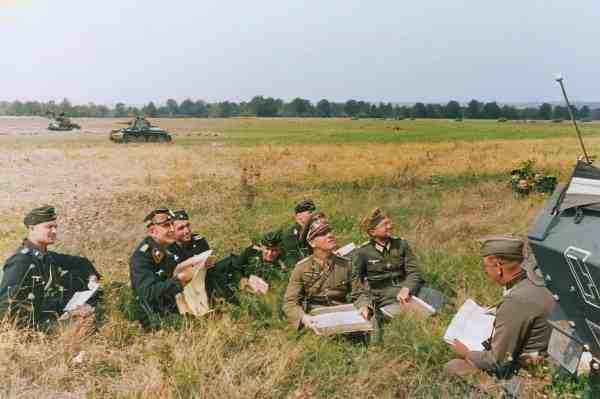
Their Doctrinal and Operational Development from 1866-1940 and Mission Order Combat Illustrations from the 1870-71, 1914-18 and 1939-45 Wars ★★★ “Orders are not written out in the minutest detail, a mission is merely given the commander. How it shall be carried out is his problem. This is done because the commander on the ground is... Continua a leggere →
Combined Arms Theory and Practice in the 20th Century
★★ Part 1: England: "Hurry up and proceed with caution!" In 1918, the British Empire was the world leader in both the development of armored equipment and tactics. The attitude prevalent at the time in most armies was still that the tank was a specialized infantry-support weapon useful in crossing entrenchments but not much else.... Continua a leggere →
A Solution Looking for a Problem: Illuminating Misconceptions in Maneuver-Warfare Doctrine
★★★ Warfare exists in the realm of both art and science – as a phenomenon in which sensing and intuition (in other words, art) play a complementary role to education and training (science). Just as a painter must have more than one color on his pallet, the practitioner of warfare must understand more than one... Continua a leggere →
Patterns of War: A Re-interpretation of the Chronology of the German-Soviet War 1941–1945
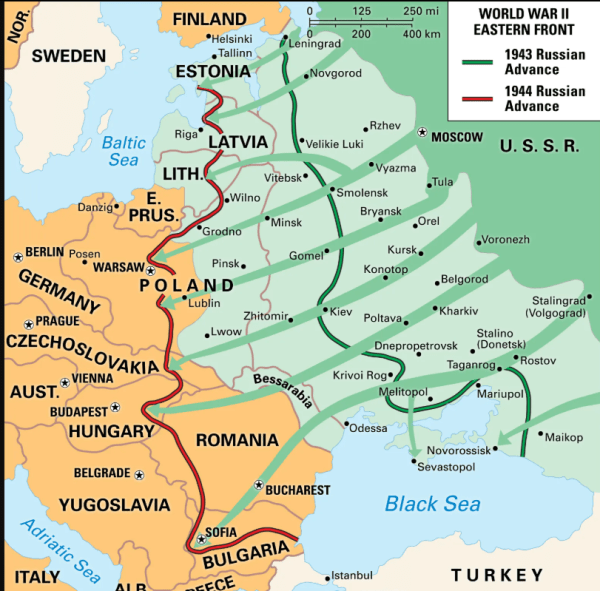
★★★★ IntroductionThe Soviet-German War 1941–1945 was unprecedented in the scope of its size and scale, covering a vast geographic area and utilizing millions of people, horses, and machines, as well as a huge scale of destruction of population and property.[1] This has posed a challenge to historians to both understand the war and then portray... Continua a leggere →
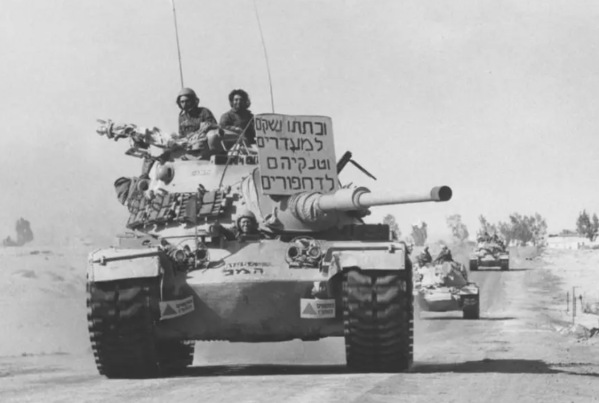
The Israeli Experience: The Apogee of Blitzkrieg
★★★ 33 minutes "Commanders seize the initiative by acting . Without action, seizing the initiative is impossible. Faced with an uncertain situation, there is a natural tendency to hesitate and gather more information to reduce uncertainty. Waiting and gathering information might reduce uncertainty, but does not eliminate it. Waiting may even increase uncertainty while providing... Continua a leggere →
The introduction of new German defensive tactics in 1916-1917 (II)
★★★★★ The Test of Battle and Further Development of Doctrine. The Anglo-French Entente spring offensive of 1917 began with a serious German defeat at Arras, but that was its high point. Subsequent British and French tactical gains and captures of men and matériel bore no relationship to the plans for a breakthrough, the hopes of... Continua a leggere →
The introduction of new German defensive tactics in 1916-1917 (I)
★★★★★ The crisis of the battle of the Somme forced the German army to introduce new tactics.[1] By the start of the battle, German defensive methods had moved away from the pre-war system of establishing and holding one strong line. Doctrine issued in October 1915 called for the construction of at least two positions, far... Continua a leggere →
Lo sviluppo della potenza militare tedesca tra le due guerre: tra mito e realtà (II)
★★★★★ L'esercito tedesco all'inizio della guerra (1939-1940): tra punti di forza e debolezze A causa della sua crescita accelerata, l'esercito tedesco stava ancora subendo grandi cambiamenti quando entrò in guerra nel settembre 1939. Anche se comprendeva un gran numero di unità in totale, la maggior parte di esse era stata creata solo di recente, soffriva... Continua a leggere →
Lo sviluppo della potenza militare tedesca tra le due guerre: tra mito e realtà (I)
★★★★★ Come strumento del regime nazista e della sua politica revisionista ed espansionistica rapidamente affermata, la potenza militare tedesca fu accuratamente messa in scena e celebrata con imponenti parate e altre dimostrazioni già prima della Seconda guerra mondiale. Dall'inizio della guerra fino al 1941, il rapido accumularsi di successi sbalorditivi (le campagne in Polonia nel... Continua a leggere →