★★ As the affairs of states continue to evolve into a complex web of interdependence, cooperation, and competition, pressure mounts on states to effectively employ the tools of statecraft to attain their political objects. The contention of this essay is that Carl von Clausewitz implicitly defined grand strategy in his magnum opus, On War, as the... Continua a leggere →
German Mission Orders
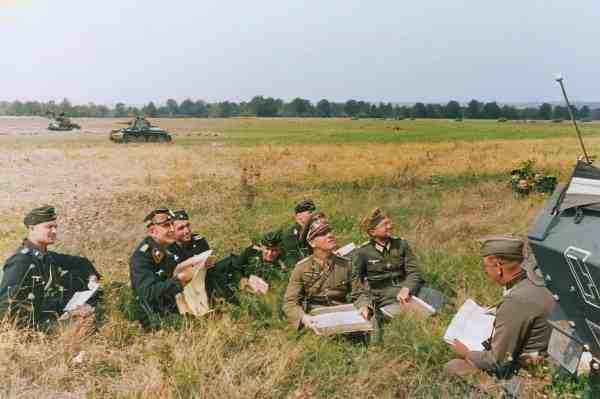
Their Doctrinal and Operational Development from 1866-1940 and Mission Order Combat Illustrations from the 1870-71, 1914-18 and 1939-45 Wars ★★★ “Orders are not written out in the minutest detail, a mission is merely given the commander. How it shall be carried out is his problem. This is done because the commander on the ground is... Continua a leggere →
Extending the Battlefield [ed. 1981]
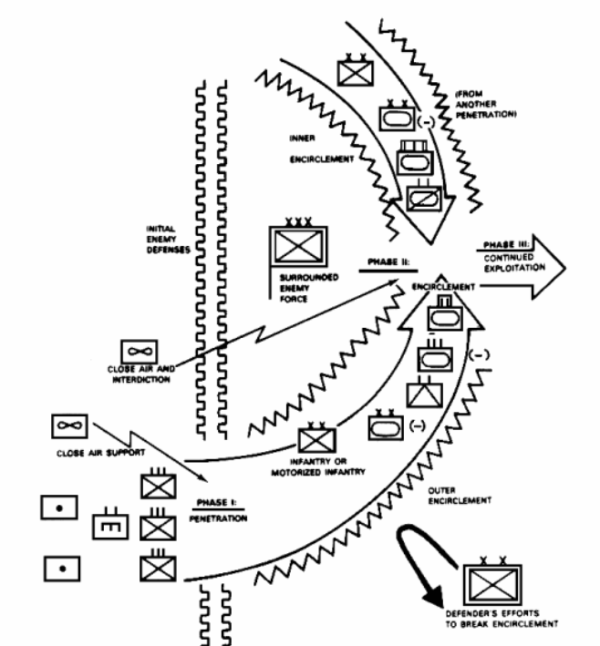
★★★ General Donn A. Starry made the following comments on the genesis of this March 1981 article and AirLand Battle: “The ultimate lesson of `Active Defense’ and the 1976 edition of FM [US Army Field Manual] 100-5 [Operations] is that it is virtually impossible to substantively rewrite doctrine satisfactorily in a matter of three years,... Continua a leggere →
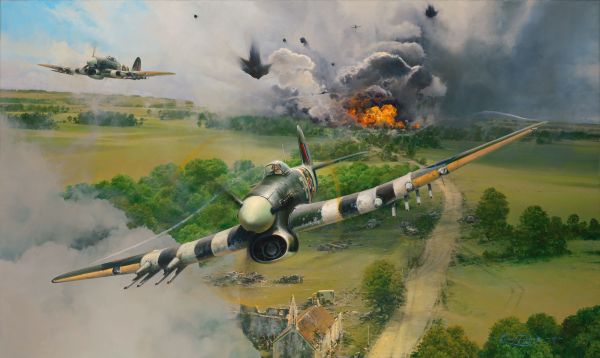
D-Day 1944 – Air Power Over the Normandy Beaches and Beyond
★★★ Operation Overlord, the Normandy invasion--like William the Conqueror's before it or the Inchon landing afterwards--will long be studied as a classic in military planning, logistics, and operations. OVERLORD depended to a remarkable degree upon the use of air power in virtually all its forms. A half-century ago, aircraft were primitive vehicles of war compared to... Continua a leggere →
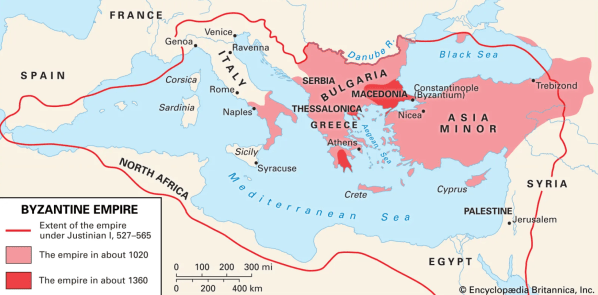
America’s Byzantine strategy
★★ The Roman Empire was the longest-lasting empire in world history, enduring more than fourteen centuries. Throughout its republican and imperial history, Rome relied heavily on military power, using conquest to expand the empire. As Luttwak observes in Grand Strategy of the Roman Empire (epilogue), the legion was the basic tactical unit of the Roman army that... Continua a leggere →
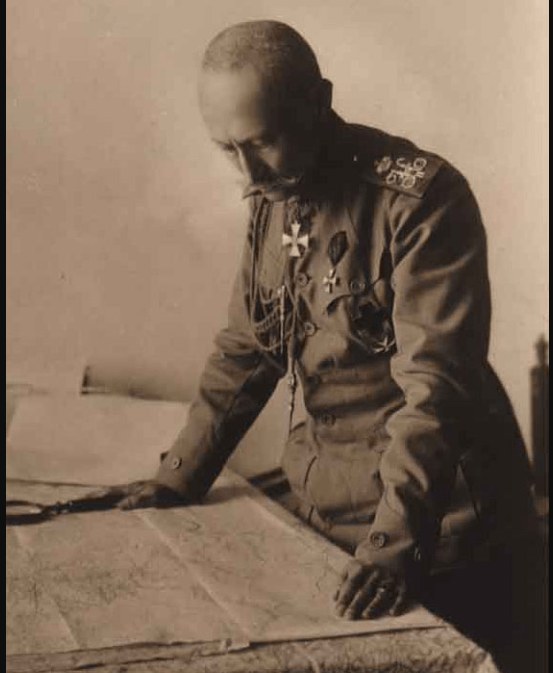
The military concept of the modern breakthrough, created by gen. Aleksei A. Brusilov
★★★ The Modern Breakthrough In the modern era of the novel Coronavirus plague, a revolutionary concept of the Breakthrough on the battlefield should be contemplated when considering engaging in the friction of war on all fronts. This modernized form of the Breakthrough should be understood and considered within the realm of the objective perspective... Continua a leggere →
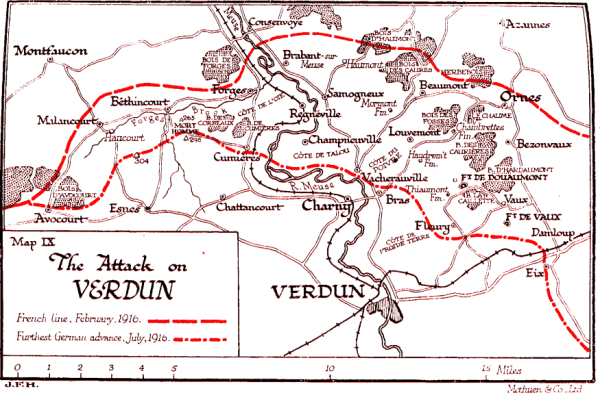
On Attrition – An Ontology for Warfare
★★★ Let’s hit a reset, please. Attrition is perhaps one of the most misunderstood and abused ideas in contemporary military thinking. Policymakers, military practitioners, and theorists often use and abuse a slew of pejoratives to undercut attrition.1 This phenomenon is a byproduct of 1980s and 1990s writing, which advocated non attritionalist forms of warfare that appeared... Continua a leggere →
A Solution Looking for a Problem: Illuminating Misconceptions in Maneuver-Warfare Doctrine
★★★ Warfare exists in the realm of both art and science – as a phenomenon in which sensing and intuition (in other words, art) play a complementary role to education and training (science). Just as a painter must have more than one color on his pallet, the practitioner of warfare must understand more than one... Continua a leggere →
Le renseignement militaire tsariste dans les Balkans : Son évaluation des guerres de 1912-1913
★★★ Alors que la guerre russo-turque (avril 1877-mars 1878) battait son plein depuis trois mois déjà, un quotidien de Londres s'intéressait aux « attachés militaires en Europe », estimant que leur « position (…) était très délicate en ces temps de guerre » . Le propos du journaliste ne portait pas sur leur rôle dans le conflit en cours, mais sur leurs efforts... Continua a leggere →
Histoire des institutions militaires françaises du Moyen Âge au XIXe siècle: d’une armée féodale à une armée moderne
★★ I - Les caractéristiques fondamentales de l’armée féodale De l’idée d’une armée à une armée féodale Les premiers concepts fondamentaux sont hérités de la tradition romaine. En Gaule, les troupes sont commandées par un maître de la cavalerie à Trèves sous les ordres d’un maître de la milice et de l’empereur. Le service militaire... Continua a leggere →