

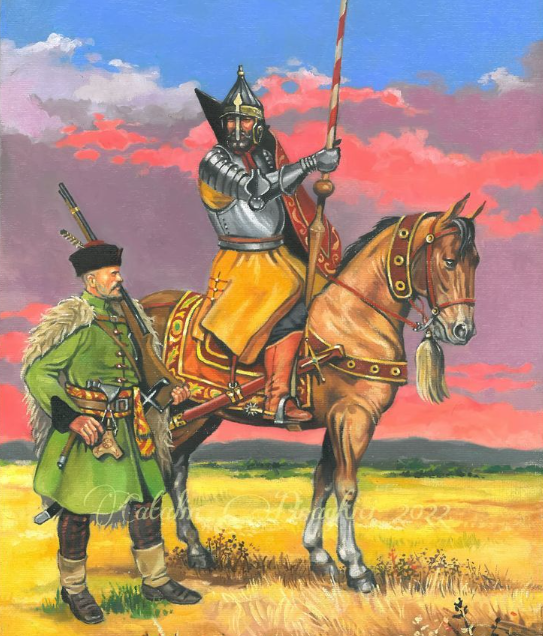
This paper examines the impact of the Military revolution in the Kingdom of Hungary and in the Principality of Transylvania specifically in areas where the transformation is as evident as in the Western European countries: the introduction of the new system in designing defensive fortifications; the proliferation of firearms; closely related to the latter, the transformation of the various military forces and especially that of the infantry; and, finally, the issue of the standing army. The Kingdom of Hungary and the Principality of Transylvania were in a very special situation, partly because of the Ottoman threat and partly because of the division of the Kingdom of Hungary into three parts – challenges the like of which no Western European country had to face. Consequently, the effects of the military revolution were felt somewhat differently here than elsewhere. In fact, the Kingdom of Hungary and the Principality of Transylvania adopted almost all the elements of the phenomenon known as the Military revolution. In some cases the former was demonstrably not an adopter but the actual starting point. The question may be raised whether the profound military changes of the period had any elements at all that could be observed in the Carpathian Basin in a form identical to what is seen in Western Europe, or, alternatively, whether the aforementioned divergences and, occasionally, opposing trends even justify the application of the very categories that Western European military historians use in discussing these changes in military affairs.
In this paper, we will examine the impact of the Military revolution in the Kingdom of Hungary and in the Principality of Transylvania specifically in areas where the transformation is as evident as in the Western European countries: the introduction of the new system in designing defensive fortifications; the proliferation of firearms; closely related to the latter, the transformation of the various military forces, especially the infantry; and, finally, the issue of the standing army.
We must bear in mind, however, that the Kingdom of Hungary and the Principality of Transylvania were in a very special situation, partly because of the Ottoman threat and partly because of the division of the Kingdom of Hungary into three parts – challenges the like of which no Western European country had to face. Consequently, the effects of the Military revolution were felt somewhat differently here than elsewhere [1].
The artillery fortress
We will start with an overview of the transformation seen in the design of defensive fortifications. The Ottoman threat, the severity of which was clearly demonstrated by the heavy defeat of the Christian coalition under Nicopolis (Nicopole in modern-day Bulgaria) in 1396, forced the ruler of the Kingdom of Hungary, Sigismund of Luxembourg, and the Hungarian nobility to develop a long-term strategy to tackle the Turkish problem as the offensive strategy had failed. The kingdom therefore opted for a defensive strategy, and already at the Diet of 1397 it was decided that the counties should provide one fully armed mounted archer for every 22 serf’s plots. The proportions later changed [2]. Essentially, this was a system of territorial mobilisation, the like of which had not been unknown either here or in other countries in Europe. The legislation suggests that the system worked, but there is unfortunately very little information available on details such as, for example, whether this peasant militia (‘militia portalis’) was involved in the constant anti-Turkish fighting on the southern borders of the Kingdom of Hungary.
Far more significant was another decision of the Hungarian Estates and the monarch: the plan to construct a long line of frontier forts in line with the new defensive strategy. The Kingdom of Hungary had a very long southern frontier consisting of over a thousand kilometres offering Ottoman raids a very wide margin of manoeuvre. At the same time, this frontier was quite fragmented, as the Voivodeship of Transylvania, which was governed separately in the Middle Ages and which later formed the basis of the Principality of Transylvania, was a particularly high mountainous area that could only be crossed via passes. The other part of the frontier region, Croatia, was also mountainous, but the central area of the country was a flat land stretching as far as Buda and butting against the Danube first and, after the Siege of Belgrade, River Sava. On the left bank of the Sava, there is a long stretch of fertile lowland known as Syrmia (Srijem/Srem in modern-day Croatia/Serbia), which was one of the major wine-producing centres of the medieval Kingdom of Hungary, and therefore one of the Kingdom’s most valuable areas from an economic point of view. It is no coincidence that the Ottoman incursions were concentrated here. King Sigismund therefore planned to focus border defence on this most vulnerable part of the frontier region [3]. The next four decades saw the development of a frontier defence system consisting of several lines of defence in the south. This may be seen as one of the greatest achievements of the reign of King Sigismund, because this southern system of frontier forts deterred or prevented Ottoman attacks until the fall of Belgrade in 1521. During his reign, some 30 frontier forts were built, in which a Florentine strategist, Filippo Scolari, played a major role [4].
A confidant of the king, Scolari was internationally known as Pippo Spano on account of being the ‘ispán’ or lord-lieutenant of Temes County (in Hungary, he is known as Ozorai Pipó or “Pipo of Ozora” for the same reason). The importance of constructing a system of frontier forts can be well illustrated by the example of the Iberian peninsula, where the Christian kingdoms tried to hold back Muslim advances by building a system of fortified castles in addition to relying on their conventional defensive forces, the cavalry. The construction and maintenance of this system of frontier forts placed an enormous financial burden on the Kingdom of Hungary, which eventually became economically bankrupt [5]. For example, even before the battle of Mohács the borders of Croatia could only be defended with the financial support of the Austrian provinces [6]. Maintaining such a system implied that a country with a population of 3 to 3.5 million had to finance a substantial standing army guarding a number of fortifications built along a border line of about 1,000 km, while the germs of such an army were just beginning to appear even in much wealthier and much more populous Western European countries such as, first and foremost, France.
As a result, the Kingdom of Hungary was already in need of financial aid in the 15th century, the main sources of which were the papacy and the Italian states, especially Venice, which itself faced quite a similar threat. Later, during the Ottoman occupation of Hungary, and in particular during the Fifteen Years’ War, besides the provinces of the Habsburg monarchy – Bohemia, Silesia, and Austria – the main aid donor was the Holy Roman Empire.
The Siege of Buda (1541) and the division of the country into three parts also created a completely new situation in the field of fortification design: the Habsburg rulers, from Ferdinand I onwards, had to rebuild a similar line of frontier forts, but now within the territory of the Kingdom of Hungary. This defence effort relied heavily on the new Italian system of fortification design. Living under the threat of Ottoman incursions, Hungary was, unsurprisingly, among the first countries east of the Alps to adopt the new Italian system [7]. In Hungarian literature, it was György Domokos who discussed the spread of modern fortification design especially in the 16th century. According to his research, it is questionable whether the new Italian fortification system was even widely adopted in Hungary during this period as the surviving data indicate that the external fortifications, which were considered a key component of the new system, were almost completely absent from Hungarian castles in the 16th century; at best, we find moats, but all other detached outworks such as, for example, ravelins, were completely absent [8].
Efforts were made to build the main forts of the Hungarian defensive network out of durable materials such as stone, with modern Italian bastions. These works were carried out almost exclusively by Italian military engineers. All but one of the forts built or rebuilt this way were conquered by the Ottomans during the 16th and 17th centuries; only the Komárno-Komárom fortification system remained in Christian hands throughout the period. As for the reasons, they certainly go beyond any potential deficiencies in the design of the defensive works [9]: facing an overpowering Ottoman threat, the Hungarian defensive forces were ill-prepared and left without external military support. If we look at the issue at a strategic level, Domokos says that Italian fortification design worked quite well in Hungary, because the Ottomans could only take these castles in the context of a major war effort, deploying their full military force. In other cases, no serious attempt was made to occupy them. This in turn allowed vast expanses of the Kingdom of Hungary to ultimately remain in Christian hands; that is, the Ottoman Empire was forced to abandon its main strategic objective of occupying Hungary, and modern fortification design played a huge role in this.
We should also add that, in line with Domokos’s conclusions, József Kelenik [10], who will be quoted later, also concluded in his researches that the fall of these great fortresses did not fundamentally change the military situation in Hungary, i.e. the Ottomans did not benefit much from them. This became apparent during the Long Turkish War (1593-1606). It is therefore understandable that the Hofkriegsrat (the Imperial War Council) later placed the emphasis of defence not on building large forts but on strengthening and expanding the existing system of frontier forts, even if there are exceptions to the rule, such as the construction of Lipótvár (Leopoldov in modern-day Slovakia) after the Ottomans took Érsekújvár (Nové Zámky in modern-day Slovakia) in 1664. Italian fortification design also appeared in the eastern part of the kingdom, which was already under Ottoman vassalage at that time, led by the Szapolyai dynasty, who struggled for decades in order to have the borders of their realm recognised by the Habsburgs.ù
New construction works commencing in the frontier region during the era also showed the adoption of the novel Italian system – interestingly, not only along the border between the Habsburg territories and Transylvania, but also along the border between the latter and the Ottoman Empire. Few new fortresses were built along the Transylvanian border, mainly for financial reasons; instead, existing ones were upgraded. Of course, the frontier fort system of both Hungary and Transylvania presupposed the maintenance of permanent garrisons – in this respect, there was no change between the Middle Ages and the 16th and 17th centuries. In both cases, the burden of maintaining those garrisons fell on the remaining parts of the kingdom, which, however, became isolated fragments as a result of the Ottoman conquest. Obviously, this could not be maintained without the involvement of foreign resources, and the Habsburg monarchy, which had established itself in the northern and western areas of the country, played a huge role in holding and defending the territories from Dalmatia all the way to the Principality of Transylvania. In the event of war, the Habsburgs were forced to call on additional imperial and other aid, mainly from the papacy, as was clearly demonstrated during the Fifteen Years’ War.
In connection with the system of frontier forts, the question of the standing army, which is an important element of the Military revolution, must be mentioned. The system of frontier forts gradually constructed after the Battle of Mohács, that is, between 1548 and 1592, consisted of an average of 15 castles located along a stretch of 100 km and defended by a total of approximately 20 to 22 thousand troops. This unit can be conceived of as a standing army with a headcount wildly fluctuating during the two centuries, dropping to about half of the original headcount during the Thirty Years’ War, and on the increase again after that war, and nearly reaching the levels typical of the previous century during the 17th century. Hungarian historians conclude that during the wars of liberation (1683-1699), 40 to 50 thousand soldiers recruited from Hungary fought in the territories under the Hungarian Crown and in the Ottoman-occupied territories, not including Croatia, Slavonia, or Transylvania. Considering the fact that the use of weapons – even if in many cases this did not involve firearms – was widespread among the non-combatant peasant population as well, that number rises to 90 to 100 thousand. Thus, out of an estimated three million inhabitants of the Habsburg-ruled part of the country, about 10% of the male population can be considered armed, which illustrates the high degree of militarisation of Hungarian society [11].
There were two military forces within the army of the Habsburg monarchy where Hungarian participation was considerable: the cavalry and the infantry. No separate Hungarian artillery existed yet. Hungarian infantrymen were referred to as Hajduks (the Hungarian form being “hajdú”). This, however, is a collective term; fundamentally, it refers to a light infantry of typically Hungarian ethnicity carrying firearms (long guns) that, however, was not yet organised in tercios, the military units most commonly seen in Western Europe at the time.
Firearms
In Hungarian literature, it was József Kelenik who examined the impact of the Military revolution on the proliferation of firearms. Kelenik focused his attention primarily on the period of the Fifteen Years’ War, since it is from this period that we have massive data on the subject. Kelenik examined the armaments of the foreign military fighting in Hungary as well as those of the Hungarian military. Taking into account the specific social and geographical conditions in Hungary, he focused his research on three important elements of military transformation, each of these being absolutely relevant in the region under review in this paper: the advent of *alla moderna* fortification, the massive proliferation of firearms, and the pronounced increase in the headcount of the armies. As far as the first of these three elements is concerned, Kelenik comes to much the same conclusion as György Domokos, whom we quoted above, namely, that during the second half of the 16th century, all military fortifications within the territory of Hungary were constructed either in the old or the new style of the Italian system; in other words, Hungary was a part of the East-Central European region where the new system of fortifications made its initial appearance very early on.
Although Kelenik’s research was based on hand-held firearms, the available data also shed light on the extent to which the fortresses of the Kingdom of Hungary were equipped with artillery. Statistical analysis of a 1577 account has demonstrated a strong (67.22%) association between the size of the fortifications in the Habsburg-ruled part of the country and the number of artillery pieces deployed in them. This is quite a high rate, which means that the fortifications in the Kingdom of Hungary were surprisingly well equipped with artillery. If later data are also taken into account, for example from the Fifteen Years’ War, it can be seen that the artillery in the large, strategically important fortresses is modern and strong, while the artillery in lesser palisaded fortresses is weaker; consequently, these smaller and less important fortresses may downwardly adjust those high rates.
It may seem surprising, for example, that while Johann von Nassau expected 1,000 infantrymen per gun in a modern army in the Low Countries, the Imperial army fighting in Hungary during the Fifteen Years’ War not only achieved this ratio but in fact exceeded it in almost every year of the campaign [12].
“Kelenik summarised what he considered to be the most important military changes as follows:
… the conduct of war based on the mass fire of firearms emerged in the Hungarian theatre of war
– as a *local* [italics mine] demand on the frontier region derived from its singular and specific characteristics;
– rooted in the fighting experiences of the armed forces of Hungary and of forces of other nationalities deployed in Hungary;
– in harmony with the battle process typical of the indigenous [i.e. Hungarian] infantry, with the exploitation of the deficiencies and shortcomings of the enemy;
– partially adjusting the up-to-date Western European battle processes to the local circumstances;
– and relying on the material resources, the technological foundations of the empire [i.e. the Habsburg monarchy]” [13].
Therefore, we are not talking about a simple case of imitation; the transformation resulted from organic internal development.
Furthermore, in the context of these special local factors, he also comes to the important conclusion that the foreign armies of the Fifteen Years’ War period were relatively well armed: two thirds of the foreign infantry and all of the cavalry fought with firearms, which seems to contradict the thesis that the Military revolution in East-Central Europe occurred later than in the core areas. And it is downright astonishing that the Hungarian infantry incorporated no pikemen and was almost entirely equipped with firearms: such an arrangement is unheard of in any other Western European country during the period. Moreover, it was not at all unusual to see in Hungary peasants using firearms, as it is indirectly evidenced by the fact that, for example, the Diets prohibited peasants from carrying firearms. It is also thought-provoking that the source material clearly describes the Hungarian infantry, as well as the foreign infantry deployed in Hungary, as fighting with firearms. Just as an example, Ottoman historian İbrahim Peçevi uses the term “Hajduk” – which fundamentally refers to infantrymen who were Hungarian by ethnicity – synonymously with a term meaning “an infantry soldier armed with a long gun” [14].
Overall, Hungarian literature concludes that on the basis of the available data, it is safe to say that at least in Hungary, the primary defining trait of the Military revolution was not the fortification *alla moderna* but the mass application of handheld firearms [15]. So, it was this phenomenon that, at least in Hungary, set warfare on an entirely new path.
Military forces and combat modalities
The fact that, as we have just discussed, the entire Hungarian infantry was equipped with firearms raises the question of how the infantry co-operated with another military force, the cavalry, especially with a view to the fact that, clearly, in the absence of pikemen, the cavalry as a defensive factor had to bear a greater burden than was usual elsewhere. It also follows from the topographical and hydrographical features of the Hungarian-Ottoman system of frontier forts that the cavalry played a much greater role, and therefore the infantry played a smaller role compared to Western European countries. According to Hungarian historians, the number of troops deployed in the Ottoman system of frontier forts in the occupied parts of Hungary was at least twice compared to the troops serving in frontier forts within the territory controlled by the Kingdom of Hungary [16]. However, an examination of the *defters* (tax registers) of the early 17th century shows that the Ottoman frontier forts in Hungary, in this period, had roughly the same headcount as the Hungarian garrisons, i.e. the traditional view of the Ottomans outnumbering the Hungarians does not fully reflect reality [17]. This is true even if the available military payrolls are far from including all soldiers; for example, they do not include volunteers, as they did not receive a regular salary. This factor could of course upwardly adjust the estimate, and, possibly, significantly so. This was probably due to the Persian war that lasted for decades: as we have seen, it was exactly during this period that the number of troops deployed in the Hungarian system of frontier forts was almost halved because of the Thirty Years’ War. To this we can add the peculiarity of the Ottoman army’s less modern weaponry, e. g. the widespread use of bows and arrows still in the 17th century [18]. In fact, during the 1645-1649 Dalmatian War against Venice, recent literature points out that the Ottoman military still made extensive use of the bow. This was presumably rooted in mentality and culture: although learning archery takes much longer than learning how to use a firearm, and although it is much easier and quicker to produce firearms than good bows, the Anatolian armies still held on to their traditional weaponry. This draws attention to the two-century tendency that the Ottoman military was only able to adopt new solutions but not to innovate: it lacked the social basis inevitably needed to do so.
There are strong indications that the intention to balance the unfavourable ratios in terms of the number of troops on the two sides also had an impact on the transformation of the fighting style of the Hungarian cavalry. This is shown by the fact that although the most conventional Hungarian military force, the hussars, still had their spears as part of their weaponry in the 16th century, most of them were already equipped with a pistol or short gun, as well as armour: chain mail or breastplate. The Imperial command made a conscious effort to increase the number of mounted soldiers equipped with long guns as early as 1577, and as a result, perhaps through Croatian mediation, such mounted soldiers with long guns (also referred to as *pixidarii*) started to appear in the Hungarian cavalry, later forming a specialised unit in its own right from the early 17th century on. It is estimated that at least 75 to 80% of the soldiers serving in the Imperial-Royal army considered their handheld firearms as their primary combat tools, compared to 50 to 60% typical of the infantry ranks serving in the Low Countries [19].
In addition to the increase of firearms from the mid-16th century and the establishment of a system of frontier forts against the Ottomans, two other local factors accelerated the proliferation of hand-held firearms. One of these factors was the strikingly large number of strongholds, castles, and minor fortresses. In these, infantrymen with heavy and hand-held firearms bore the brunt of defence almost exclusively. The disproportion in numbers between the two sides could be offset by an increase in the number and proportion of firearms. And although the Ottomans made significant strides in equipping their army with firearms, they were still not up to par with the opposing garrisons in Hungary. It follows that in the last third of the 16th century, one of the most characteristic features of the fighting style of the infantry on the frontier forts was the use of hand-held firearms by infantrymen assuming a loose – or, whenever necessary, a close – formation.
In this context, the researchers point out that because of the war against the Ottomans, which had been going on for more than a century, the Hungarian military population was averse to the use of the pike, which may be due to the fact that by the time the military transformation reached Hungary, both military tactics and troop types had been adapted to the local conditions defined by the system of frontier forts [20]. Because of the *Kleinkrieg* (a guerrilla-shaped war characterized by small units’ actions) that was taking place in the frontier regions, the troops deployed in the frontier forts practised an irregular way of fighting, which was much freer and much more informal, and therefore very different from the closed formations seen in Western Europe. This was in keeping with the mentality of the mainly peasant infantry, which could not get used to and master a system of fighting based on closed, mechanical movements. The same applies to the cavalry: this is why Hungarian troops attached to the Habsburg army were always deployed either as self-contained units, or, at most, were divided among the different units.
Against the firepower of the Hungarian infantry, the Ottoman cavalry was virtually defenceless. While in the western theatres of war, ever heavier volleys of offensive long gun fire provoked ever heavier volleys of defensive long gun fire, the Ottoman cavalry fighting in the Hungarian frontier region was not so well equipped with firearms, wherefore it resorted to its conventional methods of warfare, which resulted in enormous losses. Firearms were thus found to be effective in fending off Ottoman assaults and therefore spread even more rapidly, and the focus, as in the West, shifted to hand-held firearms in Hungary in the 1570s and 1580s. However, as we have seen, the shift was actually more dynamic in Hungary than in the West, and it did not happen as a result of Western European influence but as a result of internal development. It should be noted, however, that the material, economic, technological, and technical conditions for the creation of firepower-based warfare were not available in the Kingdom of Hungary; therefore, the Habsburg monarchy sourced the necessary equipment from the territories of the Holy Roman Empire and the Kingdom of Bohemia.
The numerical predominance of the Ottoman army was thus compensated by the greater firepower of the Christian side; as a result, already during the Fifteen Years’ War, the military tactics of the Imperial-Royal army featured a number of elements that did not appear in the West until later, in the army of Gustavus Adolphus; these include, among others, the use of pre-assembled firearm ammunition, a reduction in the weight of the firearms, a pronounced increase in the number of infantrymen equipped with firearms, along with, as we have discussed before, the appearance of infantry regiments set up without pikemen, and the reliance on a cavalry equipped with firearms and charging at the enemy at a gallop. For this reason, according to Kelenik, Hungary can also be counted among the regions where the Military revolution started or emerged [21].
The military affairs of the Principality of Transylvania in the 16th and 17th centuries
The military affairs of the Principality of Transylvania followed a trajectory similar to the part of the country under Habsburg rule: it became part of another empire, one that may have adopted certain innovations of the Military revolution such as, for example, the use of siege artillery and hand-held firearms, yet it eventually proved incapable to adopting any of the other elements enumerated above. Another important factor is that the principality was more archaic in terms of both its economy and society as compared to other parts of the Kingdom of Hungary. These factors also influenced the emergence and spread of the Military revolution.
The Transylvanian military system basically consisted of two parts, the traditional medieval military system and the mercenary system [22]. The former was made up of peasant levies equipped by the counties based on the number of the serfs’ plots in each, the Szeklers, and the contingents sent by the Saxon towns. The peasant militia (militia portalis) was an improved version of the medieval popular call-up and was also used in the Fifteen Years’ War (1591-1606). Szekler infantrymen represented another special element of the Transylvanian military system. Szeklers enjoyed collective nobility, which meant that they paid no taxes, but were obliged to go to war at their own expense for a certain period of time in the event of war. Their main weapon was the long gun. Military service was therefore the basis of their privilege, which distinguished them from serfs. Later, in the 17th century, apparently as a result of the ravages of war, they sought to avoid military service by becoming serfs and paying taxes, contrary to their earlier aspirations. Of particular note is the fact that the Szekler military order followed the ancient decimal system, units consisting of 10, 100, or 1,000 troops. The Saxon contingent, known as the “Blacks” after their uniforms, was another integral part of the military system. Fundamentally, it consisted of infantrymen mostly equipped with long guns. As a large part of Saxon society lived in towns, they were responsible not only for field and fortress service but also for the provision of artillery and all related equipment. It should be noted, however, that the princes of Transylvania also set up central cannon foundries in the 17th century [23].
As for armament, the infantrymen here were equipped with firearms at a later date, the first records of which date from 1556. The peasant militia – which consisted of infantrymen equipped in numbers proportional to the number of serf’s plots in any given territory – was poorly armed with only spears and swords; only 20% of the militiamen had long guns. In the main, the cavalry was equipped with a spear; again, firearms such as long guns and pistols only became widespread as part of their armament later in the 17th century.
In the case of the army of the princes of Transylvania, the situation was similar to the one in the Hungarian theatres of war: contrary to the western armies of the time, but similarly to the situation seen in the Habsburg part of the country, the military force playing the main role was the cavalry, while the infantry was represented in smaller numbers. An exception is, however, the Wallachian campaign in 1595, when the 50,000-men Transylvanian army marching against the Ottomans included, in addition to the Wallachian contingent, according to contemporary sources, about 20 to 25 thousand Szekler infantrymen. Thus, their ratio may have reached half the total headcount of the army; this, however, was a rare exception: the average ratio of infantrymen in the army was typically much lower.
The army of the autonomous Principality of Transylvania was basically centrally mobilised, by which we mean that in times of war the army was deployed on the basis of the orders of the prince. In other words, the system of mobilisation was a legacy of the old medieval arrangements, when the Voivodes of Transylvania governed the eastern part of the country, including its administration and economic institutions and organisation. Under the Transylvanian rulers of the early modern period, this system retained its archaic medieval elements throughout.
If 16th and 17th century Hungarian warfare was characterised by the scarcity of resources, this is even more valid for Transylvania. For this very reason, the account books of Stephen Báthory as King of Poland provide very valuable information as they contain the payrolls of the Hungarian and Transylvanian soldiers who fought in the Livonian War against Russia between 1578 and 1581. This extremely valuable list, which includes the names of thousands of officers and, occasionally, common soldiers, affords some insight into the details of the Transylvanian military system of the 16th century. A brief overview of these shows that, as in the Western European military system, the infantry received differentiated pay: not unlike what we see in Western Europe, the account book distinguishes between infantrymen receiving 4 to 6 guldens a month on the one hand and cavalrymen paid 7 to 10 guldens a month. Based on the broad average, a cavalryman’s pay was roughly double than an infantryman’s, which is in line with the situation commonly seen in the West. As far as the Transylvanians are concerned, the account books confirm what we have previously said about the armament of the Hungarian cavalry: while lancers (bastati) are mentioned only three times in the accounts, soldiers with long guns (pixidarii, bombardarii) feature in the records dozens of times. What this tells us is that the basic weapon of the troops coming from Transylvania and Upper Hungary to fight the Russians in the war theatre of Livonia was the long gun. Also, no pikemen are ever mentioned as forming subunits within the infantry [24].
Not only did the Hungarian and Transylvanian mercenaries fight successfully against the Russians, but they also had an impact on the military affairs of the Kingdom of Poland by way of their actions. The depth of this impact is evidenced by the introduction of certain Hungarian military terms into the Polish language [25]. The presence of Hungarian and Transylvanian soldiers abroad, however, draws attention to the fact that, contrary to the view prevalent among Western European historians, this region, in addition to the large number of foreign mercenaries serving here and despite the Ottoman presence, also sent mercenaries not only to Poland but also to the Romanian voivodeships, and, in fact, even Hungarian hussars as subjects of the Habsburg monarchy fought in German territory, for example in the Schmalkaldic War (1546-1547) or later in the Thirty Years’ War.
After these 16th century antecedents, another great wave of the military changes originating from the West reached the principality under the rule of Gábor Bethlen (1613-1629). The Long Turkish War caused enormous devastation in Transylvania not only in terms of demographic, social, and economic aspects, but also in terms of military affairs. In order to increase the defence capabilities of the principality and to facilitate Transylvania’s entry into the Thirty Years’ War alongside the Protestant powers, Bethlen introduced military reforms [26]. Their implementation was facilitated by the fact that the Fifteen Years’ War had not only brought immense devastation but it had also introduced the Transylvanians of the era to the weaponry and military tactics of the Western European mercenary army. Fundamentally, these reforms were implemented by mobilising Transylvania’s own internal resources. The process was certainly helped by the fact that Transylvanian society, much like Hungary and for very similar reasons, was one of the most militarised societies in European comparison. The tax revenues of the principality were not high, and the Long Turkish War had caused enormous devastation, wherefore relying on foreign mercenaries was a limited option, not to mention that this was hindered by the Habsburg government, which also did everything in its power to prevent the influx of modern military equipment into Transylvania.
The backbone of the reform was therefore the renewal of Transylvania’s traditional military organisation, which included the continuation of the measures embarked upon by the predecessors. Among them, the first element that must be highlighted is the resettlement of the Hajduks [27]. Initially, the term “Hajduk” (“hajdú” in the original Hungarian form of the word) referred to a class of armed drovers walking enormous herds of cattle to the South German and North Italian markets, guarding and occasionally defending the livestock against robbers and predators. In all probability, the term comes from “hajtó”, the Hungarian word for a cattle drover. Later on, the term was used in reference to infantrymen, typically of Hungarian ethnicity, who either earned a living as mercenaries serving the king or any of the country’s lords, or they were “free Hajduks” available to anyone as hired guns. As a result of the Fifteen Years’ War, their numbers grew to tens of thousands; after the war, the pacification of this class turned out to be an immense problem. One way of solving it was to resettle them. Similarly to the Szeklers mentioned above, Hajduks were also granted collective nobility in return for two months’ military service in the event of a war. The bulk of Bethlen’s army consisted of Hajduks serving either as cavalrymen or infantrymen [28].
Another element of the reforms was the aforementioned recruitment of foreign, mainly German mercenaries, for which the Thirty Years’ War provided an opportunity [29]. The third element was the development of artillery and the fortress system: in practice, this meant the creation of a cannon foundry (Gyulafehérvár, Alba Julia in modern-day Romania) and the further proliferation of *alla moderna* fortifications in the construction of the principality’s system of frontier forts [30]. The effectiveness of these measures was demonstrated in Bethlen’s campaign against the Habsburgs, in which the reorganised Transylvanian army held its own against Imperial troops led by such outstanding Habsburg commanders as Wallenstein, D’Ampiere, or Bucquoi.
The Kingdom of Hungary and the Principality of Transylvania thus adopted almost all the elements of the phenomenon known as the Military revolution, and in some cases the former was demonstrably not an adopter but the actual starting point. These military changes also swept through the Principality of Transylvania, albeit with some delay; but thanks to them, the reorganized Transylvanian army of the 17th century successfully took up the fight against the Imperial troops. The reasons for this can be traced back to the special situation of the region, with constant fighting against the Ottomans from the beginning of the 15th century. The question may be raised whether the profound military changes of the period had any feature at all that could be observed in the Carpathian Basin in a form identical to what is seen in Western Europe, or, alternatively, whether the aforementioned divergences and, occasionally, opposing trends even justify the applicability of the very categories that Western European military historians use by discussing these changes in military affairs.
To sum up briefly, during the 16th and 17th centuries, a wave of profound military changes swept through the Kingdom of Hungary and the Principality of Transylvania. However, both the rate and the nature of those changes were unique to each of those two polities. The reasons for this are the different levels of development and the different degrees of integration of the two territories into the Habsburg Monarchy and into the Ottoman Empire, respectively. The modernisation of the armed forces also took place to different degrees, but certain elements of the profound military changes characteristic of the period emerged very early in both areas. Because of constant fighting, the militarisation of society was much greater in these regions than in Western Europe.
Note:
[1] See most recently G. Pálffy, Hungary between two Empires 1526-1711, Indiana Univ. Press, Bloomington 2021. On the proliferation of the Military revolution in Hungary see G. Dávid, P. Fodor (eds.), Ottomans, Hungarians and Habsburgs in Central Europe: the military confines in the era of Ottoman conquest, Brill, Leiden-Boston-Köln 2000.
[2] Magyarország hadtörténete [The military history of Hungary], vol. I, Zrínyi, Budapest 2017, pp. 237-8.
[3] G. Pálffy, The Origins and Development of the Border Defence system Against the Ottoman Empire in Hungary (up to the Early Eighteenth Century), in Dávid, Fodor (eds.), Ottomans, Hungarians and Habsburgs in Central Europe, cit., pp. 7-9.
[4] Magyarország hadtörténete, cit., I, pp. 242-4.
[5] In the 15th century, the revenues of the Ottoman Empire reached 2,5 to 3 million gold ducats, while the revenues of the Kingdom of Hungary were much lower, estimated at merely 330 to 350 thousand gold ducats.
[6] Pálffy, The Origins and Development, cit., pp. 14–5.
[7] I. Szántó, A végvárendszer kiépítése és fénykora Magyarországon [The construction and heyday of the defense system in Hungary], Akadémiai Kiadó, Budapest 1980; G. Domokos, Ottavio Baldigara. Egy itáliai várfundáló mester Magyarországon [Ottavio Baldigara. An Italian master castle builder in Hungary], Balassi Kiadó, Budapest 2000.
[8] Domokos, Ottavio Baldigara, cit., pp. 19–29.
[9] On the Ottoman side, the alla moderna military architecture is only visible in castles they seized from the Kingdom of Hungary. The Ottomans themselves hardly ever built defense works, and when they did, such works were limited to a single tower at most. One might recall the circular bastion built by Kasim Pasha in Buda Castle, which was obviously constructed by mechanically copying the already existing fortifications of the castle.
[10] J. Kelenik, A hadügyi forradalom és jelenségei Európában és a Magyar Királyságban a XVI. század második felében [The Military revolution and its phenomena in Europe and the Kingdom of Hungary in the second half of the 16th century], in T. Petercsák, D. István (eds.), Hagyomány és korszerűség a XVI-XVII. században – Studia Agriensia 17 [Tradition and modernity in the XVI-XVII centuries – Studia Agriensia 17], Vármúzeum, Eger 1997, pp. 40-57; Id., The military Revolution in Hungary, in Dávid, Fodor (eds.), Ottomans, Hungarians and Habsburgs in Central Europe, cit., pp. 117-62; Id., A kézi lőfegyverek jelentősége a hadügyi forradalom kibontakozásában. A magyar egységek fegyverzete a tizenötéves háború időszakában [The importance of small arms in the development of the Military revolution. The armament of the Hungarian units in the time of the fifteen years war], in “Hadtörténelmi Közlemények”, 104, 1991, pp. 3-52.
[11] I. Czigány, Reform vagy kudarc? Kísérletek a magyarországi katonaság beillesztésére a Habsburg Birodalom haderejébe 1600-1700, [Reform or failure? Attempts to integrate the Hungarian military into the army of the Habsburg Empire 1600-1700], Balassi Kiadó, Budapest 2004, p. 188.
[12] Kelenik, The Military revolution, cit., p. 140.
[13] Ibid., p. 157.
[14] Ibid., p. 147.
[15] This conclusion, however, is in need of further specification: the existence of a fully developed system of frontier forts was exactly the most important prerequisite for the mass proliferation of hand-held firearms.
[16] But it should be noted that the garrisons along the eastern stretch of the Turkish frontier region, opposite the vassal Principality of Transylvania, were much smaller; in other words, the military was unevenly distributed along the frontier region. See the example of the Vilayet-i Temesvár: K. Hegyi, The Ottoman Network of Fortresses in Hungary, in Dávid, Fodor (eds.), Ottomans, Hungarians and Habsburgs in Central Europe, cit., pp. 173, 186-90. On the Ottoman defence-system in Hungary see more at K. Hegyi, A török hódoltság várai és várkatonasága [Castles and fortress armies of the Turkish occupation], 3 voll., História, Budapest 2007.
[17] G. Ágoston, The Costs of the Ottoman Fortress-System in Hungary in the Sixteenth and Seventeenth Centuries, in Dávid, Fodor (eds.), Ottomans, Hungarians and Habsburgs in Central Europe, cit., pp. 200-3.
[18] F. Moro, Venezia e la guerra in Dalmazia 1644-1649, LEG Edizioni, Gorizia 2018, p. 192.
[19] Kelenik, The Military revolution, cit., p. 154.
[20] Besides the traditions, one might also consider the high cost of the arms and equipment needed to outfit pikemen, and that acquiring the tactical skill needed for this mode of combat takes extensive training and a lot of practice.
[21] Kelenik, The Military revolution, cit., p. 158.
[22] J.B. Szabó, G. Somogyi, Az Erdélyi Fejedelemség hadserege [The army of the Principality of Transylvania], Zrínyi, Budapest 1996.
[23] Szabó, Somogyi, Az Erdélyi Fejedelemség hadserege, cit., pp. 63-4.
[24] Rationes curiae Stephani Báthory regis Poloniae historiam Hungariae et Transylvaniae illustrantes 1576-1586, (Fontes rerum Hungaricarum III), ed. Andreas Veress, Typis Societatis Stephaneum Typographicae, Budapest 1918, pp. 19, 28, 36, 41, 79, 133, 141, 166, 172, 175, 220 (‘pixidarii’, ‘bombardarii’), 1, 71, 157 (‘hastae’, ‘hastati’); Kelenik, A kézi lőfegyverek, cit., pp. 32-3.
[25] During Báthory’s reign as the King of Poland, 12 to 14 thousand Hungarian and Transylvanian soldiers served in the Polish army; during the 1620s, their numbers were estimated at 30 to 40 thousand. See J.B. Szabó, Bethlen Gábor hadai a harmincéves háborúban. A kora újkori hadügyi fejlődés Kelet-Közép-Európában: az Erdélyi Fejedelemség példája a XVII. század első felében (1. rész) [Gábor Bethlen’s armies in the Thirty Years’ War. Military development in East-Central Europe in the Early Modern Age: the case of the Principality of Transylvania in the first half of the 17th century, Part I], in “Hadtörténelmi Közlemények”, 126, 2013, n. 4, p. 976.
[26] Szabó, Bethlen Gábor, cit., pp. 963-88.
[27] The other measure was the reorganisation of the peasant militia (militia portalis). Cfr. ibid., p. 980.
[28] Ibid., p. 981.
[29] Ibid., pp. 982-4.
[30] B. Szabó, Bethlen Gábor, cit., pp. 984-5
Autore: Tamás Kruppa


Rispondi