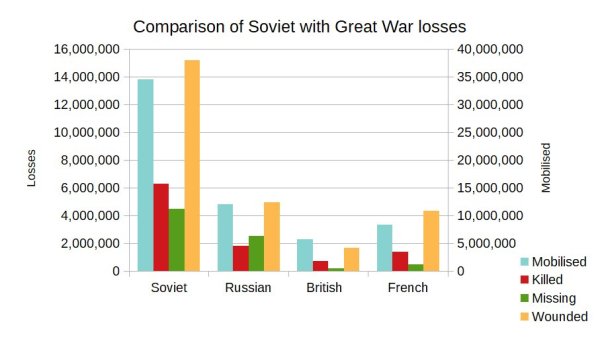
★★★★ Accurately measuring combat effectiveness is a cornerstone of military and political science research. Lanchester (1916) laid the foundation for this field with his renowned Lanchester equations, which focus on quantifying casualties based on the number of engaged combatants. These equations have profoundly influenced subsequent research, inspiring numerous variants over the decades. Notable adaptations include... Continua a leggere →
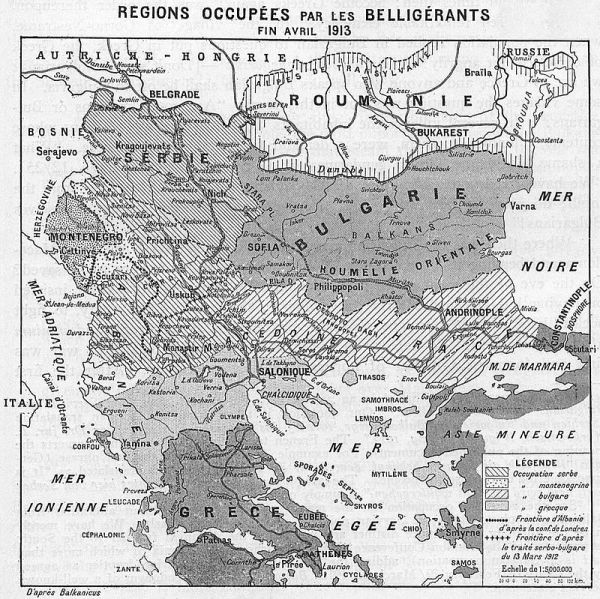
Le renseignement militaire tsariste dans les Balkans : Son évaluation des guerres de 1912-1913
★★★ Alors que la guerre russo-turque (avril 1877-mars 1878) battait son plein depuis trois mois déjà, un quotidien de Londres s'intéressait aux « attachés militaires en Europe », estimant que leur « position (…) était très délicate en ces temps de guerre » . Le propos du journaliste ne portait pas sur leur rôle dans le conflit en cours, mais sur leurs efforts... Continua a leggere →
L’impiego tattico della fanteria durante la guerra Russo-Giapponese [ed.1911]
★★★★ Sebbene della guerra russo-giapponese non sia stata ancora pubblicata la storia ufficiale, pure le notizie che ci sono fin qui pervenuta per opera essenzialmente dello stato maggiore tedesco e di quello inglese, nonché per le numerosissime opere uscite fino ad ora sull'argomento, hanno ormai dissipata la fitta nebbia che fino a poco tempo fa... Continua a leggere →
The evolutions of the world military forces since the end of Cold War
★★★ The dominant liberal theory has presented military expenditure as unproductive and wars and economic conflicts are prejudicial to the good functioning of economic mechanisms. Today the success of the American economy, which was regarded as declining at the end of the years 1980, raises the issue of the correlation between war, military expenditures, and... Continua a leggere →
Il fenomeno delle “perdite” nella storia militare
★★ L'origine delle perdite Il mondo militare ha un linguaggio che lo caratterizza. A seconda dell'epoca, della cultura e delle sottigliezze linguistiche, termini e persino concetti precisi finiscono per emergere e radicarsi nella letteratura specifica di questo universo. A volte alcuni di questi concetti e termini, che preferisco semplicemente chiamare "espressioni", vengono utilizzati indiscriminatamente, perdendo... Continua a leggere →
Land Warfare in the 21 st Century (II) – [ed.1993]
★★★★ TECHNOLOGICAL CHANGES IN THE CONDUCT OF LAND WARFARE Technological innovations, many of which were dramatically demonstrated in the Gulf War, are giving rise to what is being called a "military-technical revolution." This "revolution" will have a dramatic effect on the Army and land warfare through five dominant trends: lethality and dispersion; volume and precision... Continua a leggere →
Land Warfare in the 21 st Century (I) – [ed.1993]
★★★★ This paper was originally presented at the U.S. Army War College Fourth Annual Strategy Conference held February 24-25, 1993, with the assistance of the Office of Net Assessment. The Strategic Studies Institute is pleased to publish the paper as part of its Conference Series. Preface Land warfare in the 21st century will be shaped... Continua a leggere →
Analyzing a Country’s Strategic Posture: Suggestions for Practitioners
★★★ 33 minutes Diplomats and defense attachés when posted to a country are expected to give a fresh assessment of that country’s strategic posture. The term strategic posture is used here to encompass not only the country’s military—personnel, equipment, bases, and other infrastructure—but also its political-strategic alignment (friendly? neutral? potential rival/adversary?), its overall attitude to war, and... Continua a leggere →
A strategic posture for a new era
Experts, including Congressional Strategic Posture Commission Commissioners, examine the future of US nuclear strategy to develop nonpartisan policies addressing key security challenges facing the nation.
Strategy, Tactics, Logistics and Invention [ed.1917]
9 minutes Perhaps no four words are more vaguely understood than the four words that head this page. Strategy comes from two Greek words: stratos, an army, and agein, to lead. These two words were combined in the Greek language to form the word strategos, which we translate by the word "general." Among the many... Continua a leggere →