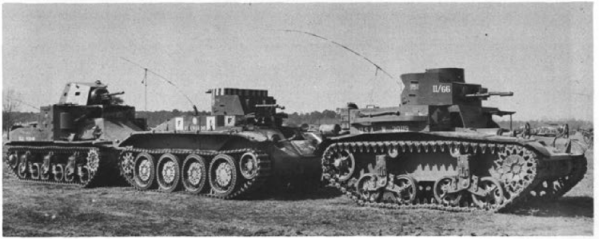
★★★ Official War Department doctrine called for tanks to be used as dose support weapons for the infantry, thus the wartime practices for the employment of tanks would continue. A board of officers convened by the War Department in 1919 to study tank tactics recognized the value of tanks as an adjunct to the infantry... Continua a leggere →
The Development of American Armor 1917-1940 (I)
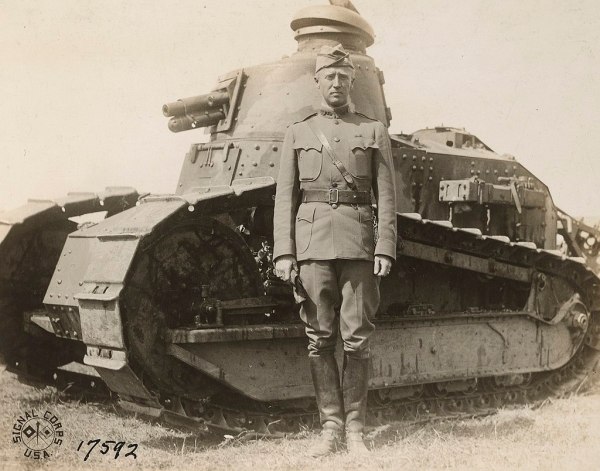
★★★ The world war I experience When the United States entered World War I, in April 1917, tanks had yet to prove their capabilities. Following the Battle of the Somme in 1916, the Allies had employed tanks with disappointing results. Because of their poor performance, the American Military Mission in Paris declared tanks a failure.... Continua a leggere →
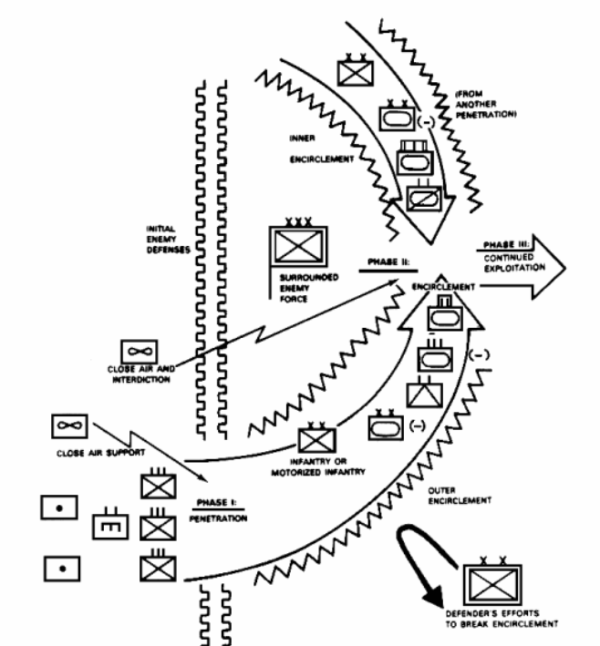
Extending the Battlefield [ed. 1981]
★★★ General Donn A. Starry made the following comments on the genesis of this March 1981 article and AirLand Battle: “The ultimate lesson of `Active Defense’ and the 1976 edition of FM [US Army Field Manual] 100-5 [Operations] is that it is virtually impossible to substantively rewrite doctrine satisfactorily in a matter of three years,... Continua a leggere →
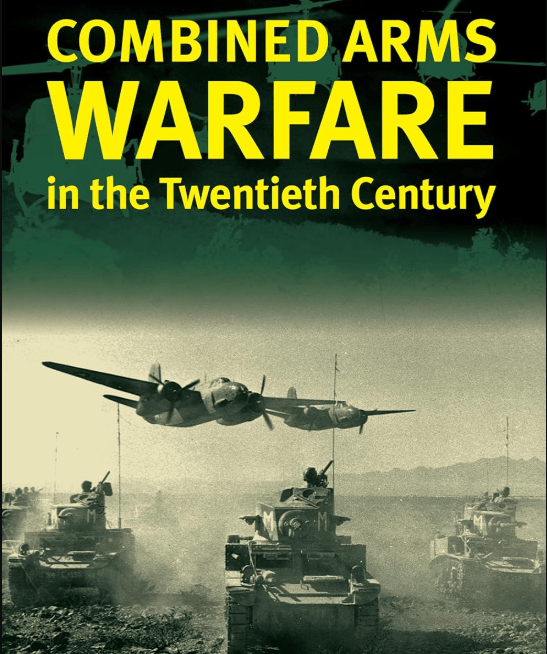
Combined Arms Theory and Practice in the 20th Century
★★ Part 1: England: "Hurry up and proceed with caution!" In 1918, the British Empire was the world leader in both the development of armored equipment and tactics. The attitude prevalent at the time in most armies was still that the tank was a specialized infantry-support weapon useful in crossing entrenchments but not much else.... Continua a leggere →
Measuring combat effectiveness: a novel method based on two-dimensional frontline advancement rate
★★★★ Accurately measuring combat effectiveness is a cornerstone of military and political science research. Lanchester (1916) laid the foundation for this field with his renowned Lanchester equations, which focus on quantifying casualties based on the number of engaged combatants. These equations have profoundly influenced subsequent research, inspiring numerous variants over the decades. Notable adaptations include... Continua a leggere →