★★★ Interrogation of Generalleutnant [Lieutenant General] Rudolf Schmetzer concerning the construction of German defenses in Normandy, France. A) Fundamentals 1) Commands and organization of fortress engineers The sector corresponded exactly to the extent of command of the LXXXIV. Gen.Kdo [Generalkommando - Corps Headquarters], the coastal front of which reached from a point northeast of Caen to the border between... Continua a leggere →
Behind Enemy Plans: A Process-Tracing Analysis of Germany’s Operational Approach to a Western Invasion
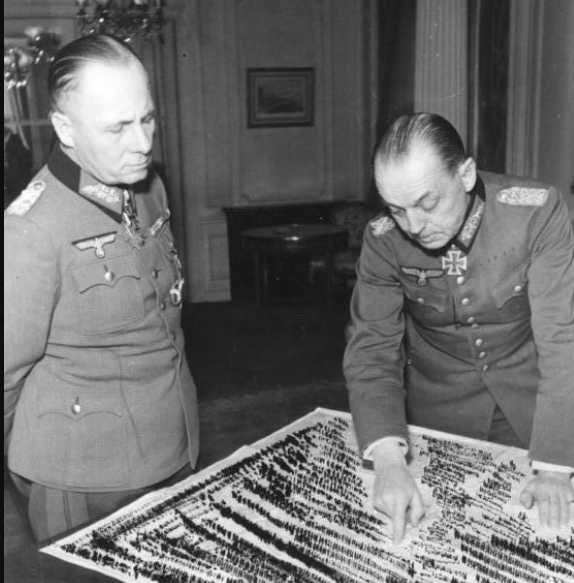
★★★ No plan survives contact with the enemy. —Field Marshal Count Helmuth von Moltke the Elder Sixty-four years after Moltke’s observation, two mid-level German commanders, faced with the herculean task of changing the course of history on an early June 1944 morning, failed in their duties. In using structured and qualitative analysis to examine German... Continua a leggere →
D-Day, A Year Too Late?
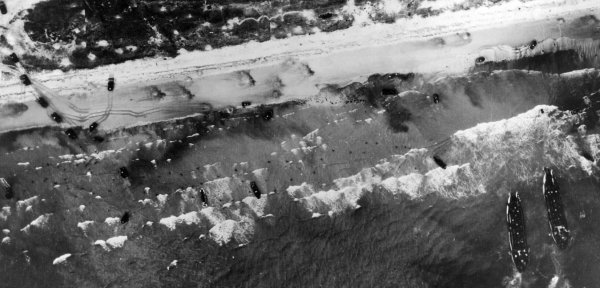
★★★ In April 1942, General George C. Marshall, the U.S. Army’s Chief of Staff, went to London with a set of plans to bring about the defeat of Germany in northwestern Europe. Operation Bolero detailed a rapid buildup of U.S. forces in England, and Operation Sledgehammer foresaw an emergency 1942 landing in France should the... Continua a leggere →
D-Day: planning and execution
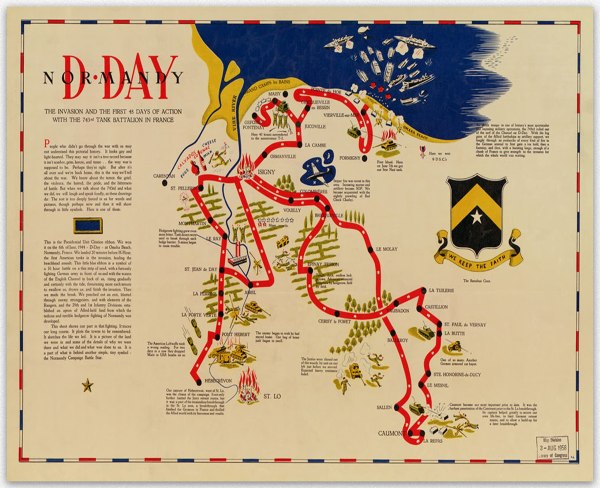
★★★★ A cross-channel attack to initiate the European Campaign remained the linchpin of American strategy for taking the war to Germany and defeating its armies in the field. This approach remained the centerpiece of Allied strategy despite the feared casualty rate from a dedicated German resistance, and the fact that the nei-ther the British allies... Continua a leggere →
Slavs in wars with Byzantium
★★ Beginning in the 1st century AD, Slavic tribes participated in the struggle against the Roman Empire. Ancient sources mention East Slavic tribes that fought against the Roman conquerors. More detailed information about the wars of the Slavic tribes dates back to the 6th–8th centuries, when the Slavs fought against the Eastern Roman Empire, in... Continua a leggere →
The Japanese-Russian War of 1904-1905 [Russian encyclopedia entry – ed. 1908]
★★★ In March 1902, Russia , in order to protect the East China Railway, occupied Manchuria with its troops, pledging to evacuate it within three deadlines; the last was October 8, 1903. This obligation was not fulfilled on the grounds that the state of China did not guarantee the safety of the Russian railway line. In July... Continua a leggere →
The military concept of the modern breakthrough, created by gen. Aleksei A. Brusilov
★★★ The Modern Breakthrough In the modern era of the novel Coronavirus plague, a revolutionary concept of the Breakthrough on the battlefield should be contemplated when considering engaging in the friction of war on all fronts. This modernized form of the Breakthrough should be understood and considered within the realm of the objective perspective... Continua a leggere →
The Turkish Army 1914 – 1918
★★★ Army Organization At the turn of the century, there were two major administrative levels in the Ottoman Armed forces, which were the “armies” and the “divisions”. The latter was directly linked to the former and there were no “corps” between them. In addition to their commanders, each army had a chief of staff (erkan-ı... Continua a leggere →
Il vento del Diavolo: la rivolta dell’esercito del Bengala
★★★ La Compagnia delle Indie Orientali e l’Esercito del Bengala Nel 1670 Carlo II d’Inghilterra accordò alla Compagnia delle Indie Orientali[1] il diritto di acquisire nuovi territori, di battere moneta e di arruolare truppe sui propri territori. Partendo dalle piccole stazioni commerciali di Madras e Bombay, la Compagnia cominciò impetuosamente ad espandere l'area sotto il... Continua a leggere →
Ships of the navy of ancient Rome
Non refert quam multos, sed quam bonos habeas (It's not how much you have, but how good they are) ★★ Roman shipbuilding was entirely in line with the general Mediterranean tradition. As the analysis of written sources, as well as numerous material evidences - reliefs, mosaics, etc. - shows, the types of ships used by... Continua a leggere →