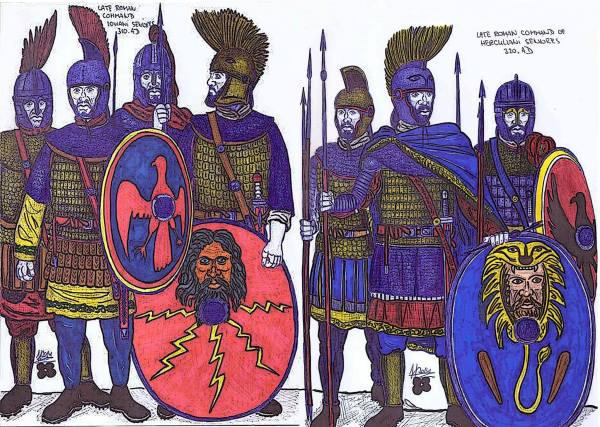
★★ Until the 4th century AD, the entire Roman army could be called a border army, since most of it, starting from the time of Augustus, was located along the borders, and there was a clear tendency to attach individual legions and cohorts to certain border provinces. That is, we can say that the border guard system... Continua a leggere →
The Roman army during the Late Empire (I)
★★ The economic crisis that struck the Empire in the 3rd century led to a sharp deterioration in the situation of all lower classes of the population and caused a number of powerful demonstrations of the masses in the provinces, Italy and in Rome itself. The deeper the process of development of the colonate, the enslavement of... Continua a leggere →
Le navi da trasporto nell’evo antico: imbarcare la cavalleria
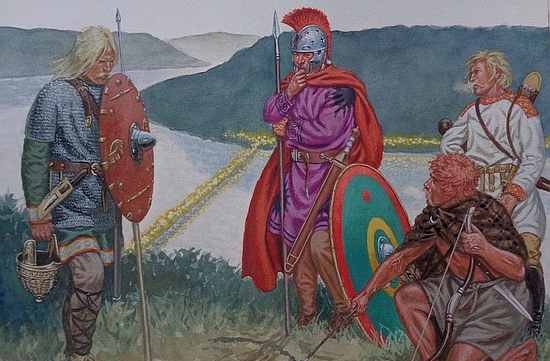
★★ Almeno nel concetto, il trasporto degli animali via mare è antico quanto la navigazione marittima a scopi commerciali praticata nel periodo della fine dell'età del Bronzo. Notizie scritte di trasporti di cavalli attraverso il mare si hanno infatti a partire dalla seconda metà del primo millennio a.C.. Le antiche talassocrazie avevano capito che il... Continua a leggere →
Auxilia, alleati e barbari al servizio di Roma – V sec. a.C. – III sec. d.C.
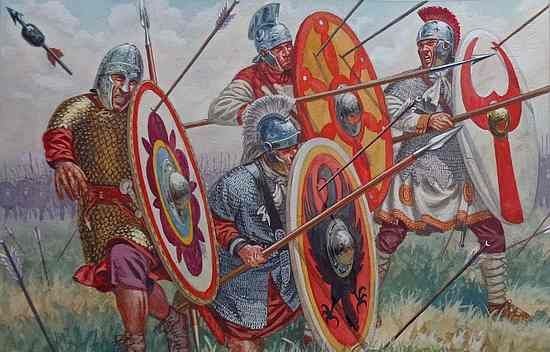
★★ Per definire il concetto di ausiliario è necessario partire dall'inizio della storia Repubblicana, quando i Romani stavano ancora cercando di affermarsi nel ginepraio della realtà centro-Sud Italiana, districandosi tra le numerose tribù Italiche confinanti il territorio sacro dell'Urbe. Il primo caso di patto giuridico a noi pervenuto è del 493 a.C., quando viene stipulato... Continua a leggere →
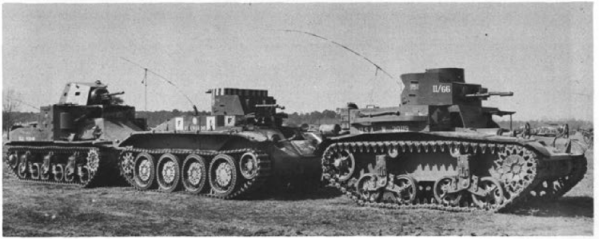
The Development of American Armor 1917-1940 (II)
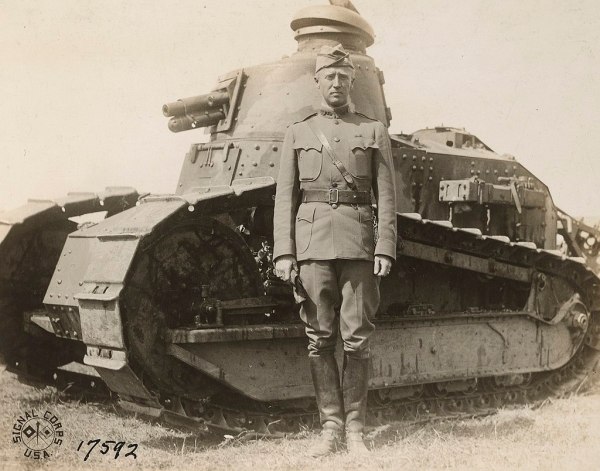
★★★ Official War Department doctrine called for tanks to be used as dose support weapons for the infantry, thus the wartime practices for the employment of tanks would continue. A board of officers convened by the War Department in 1919 to study tank tactics recognized the value of tanks as an adjunct to the infantry... Continua a leggere →
The Development of American Armor 1917-1940 (I)
★★★ The world war I experience When the United States entered World War I, in April 1917, tanks had yet to prove their capabilities. Following the Battle of the Somme in 1916, the Allies had employed tanks with disappointing results. Because of their poor performance, the American Military Mission in Paris declared tanks a failure.... Continua a leggere →
The Turkish Army 1914 – 1918
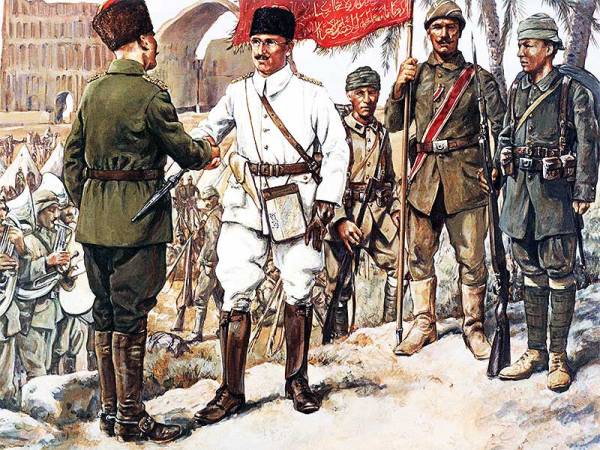
★★★ Army Organization At the turn of the century, there were two major administrative levels in the Ottoman Armed forces, which were the “armies” and the “divisions”. The latter was directly linked to the former and there were no “corps” between them. In addition to their commanders, each army had a chief of staff (erkan-ı... Continua a leggere →
Ships of the navy of ancient Rome
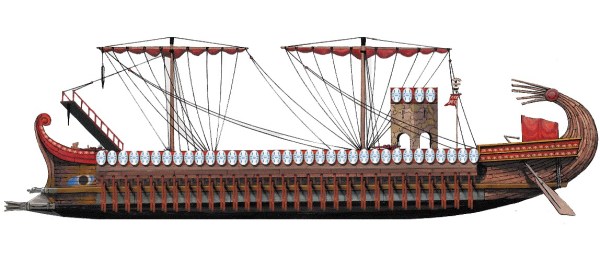
Non refert quam multos, sed quam bonos habeas (It's not how much you have, but how good they are) ★★ Roman shipbuilding was entirely in line with the general Mediterranean tradition. As the analysis of written sources, as well as numerous material evidences - reliefs, mosaics, etc. - shows, the types of ships used by... Continua a leggere →
Exarchate of Ravenna. The armed forces of byzantine Italy
★★ The question of the evolution of the Byzantine army in Italy has two aspects: sociological and organizational. In social terms, this problem is not considered. But since the army is not just a unique social group, but a certain socio-administrative structure with clear tasks and goals, its development in this aspect also requires special... Continua a leggere →
Histoire des institutions militaires françaises du Moyen Âge au XIXe siècle: d’une armée féodale à une armée moderne
★★ I - Les caractéristiques fondamentales de l’armée féodale De l’idée d’une armée à une armée féodale Les premiers concepts fondamentaux sont hérités de la tradition romaine. En Gaule, les troupes sont commandées par un maître de la cavalerie à Trèves sous les ordres d’un maître de la milice et de l’empereur. Le service militaire... Continua a leggere →