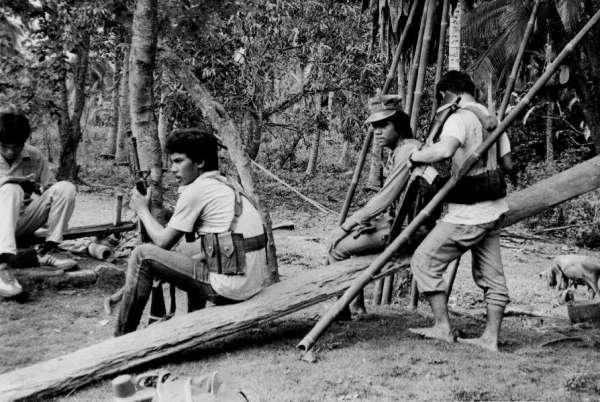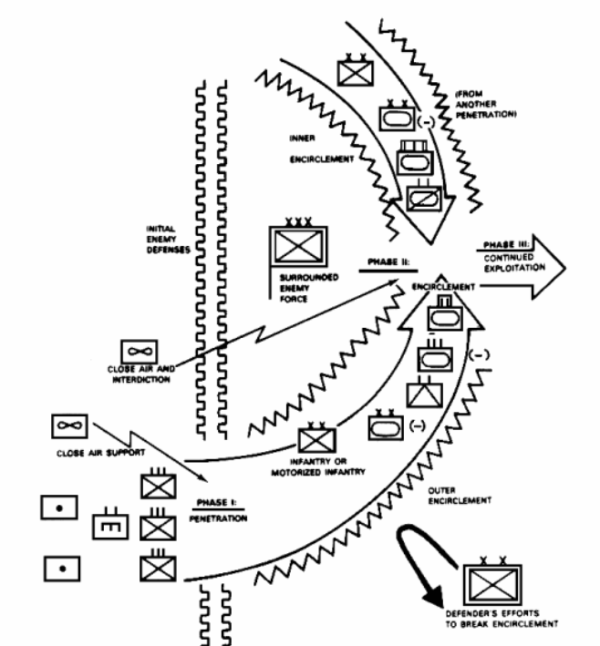
★★ No longer a limited military tactic, guerrilla warfare has political and economic consequences that can be more dangerous than the armed force employed. Guerrilla warfare is an open sore that annoys today, is a nuisance tomorrow, weakens in a month, and may cause death if not treated properly. Guerrilla warfare may be waged in... Continua a leggere →
Intelligence Cooperation between the Kuomintang Agents and British Special Operations Executive in Singapore-Malaya, 1942–1945
★★★ The Special Operations Executive (SOE) in Singapore-Malaya during the Pacific War has consistently been a focal point of scholarly attention. In the existing academic and literary spheres, there is a plethora of research and retrospective works on SOE, which can be viewed from three perspectives. The first perspective focuses on the cooperation between the... Continua a leggere →
The grand strategy of carl von clausewitz
★★ As the affairs of states continue to evolve into a complex web of interdependence, cooperation, and competition, pressure mounts on states to effectively employ the tools of statecraft to attain their political objects. The contention of this essay is that Carl von Clausewitz implicitly defined grand strategy in his magnum opus, On War, as the... Continua a leggere →
German Mission Orders
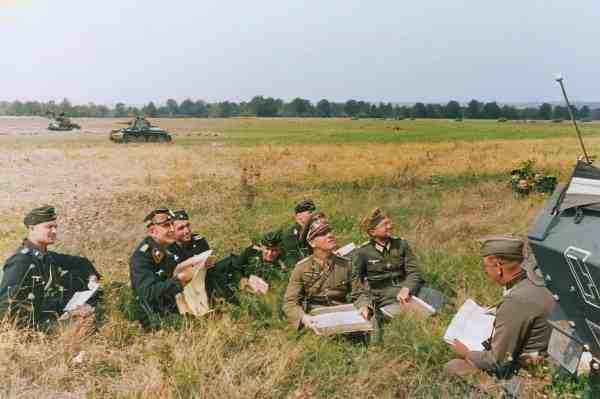
Their Doctrinal and Operational Development from 1866-1940 and Mission Order Combat Illustrations from the 1870-71, 1914-18 and 1939-45 Wars ★★★ “Orders are not written out in the minutest detail, a mission is merely given the commander. How it shall be carried out is his problem. This is done because the commander on the ground is... Continua a leggere →
The Development of American Armor 1917-1940 (II)
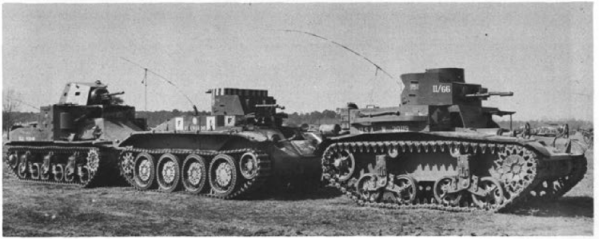
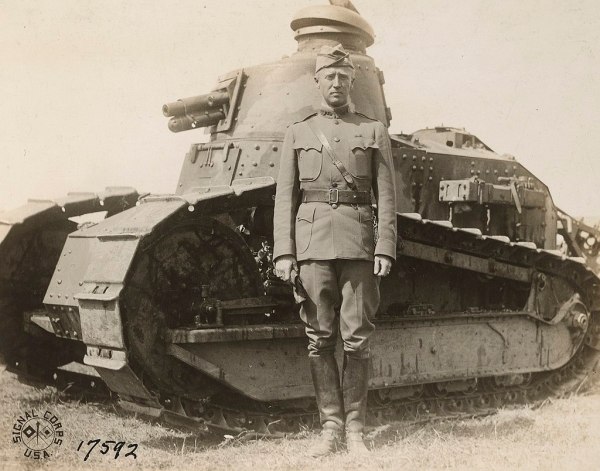
★★★ Official War Department doctrine called for tanks to be used as dose support weapons for the infantry, thus the wartime practices for the employment of tanks would continue. A board of officers convened by the War Department in 1919 to study tank tactics recognized the value of tanks as an adjunct to the infantry... Continua a leggere →
The Development of American Armor 1917-1940 (I)
★★★ The world war I experience When the United States entered World War I, in April 1917, tanks had yet to prove their capabilities. Following the Battle of the Somme in 1916, the Allies had employed tanks with disappointing results. Because of their poor performance, the American Military Mission in Paris declared tanks a failure.... Continua a leggere →
Extending the Battlefield [ed. 1981]
★★★ General Donn A. Starry made the following comments on the genesis of this March 1981 article and AirLand Battle: “The ultimate lesson of `Active Defense’ and the 1976 edition of FM [US Army Field Manual] 100-5 [Operations] is that it is virtually impossible to substantively rewrite doctrine satisfactorily in a matter of three years,... Continua a leggere →
Combined Arms Theory and Practice in the 20th Century
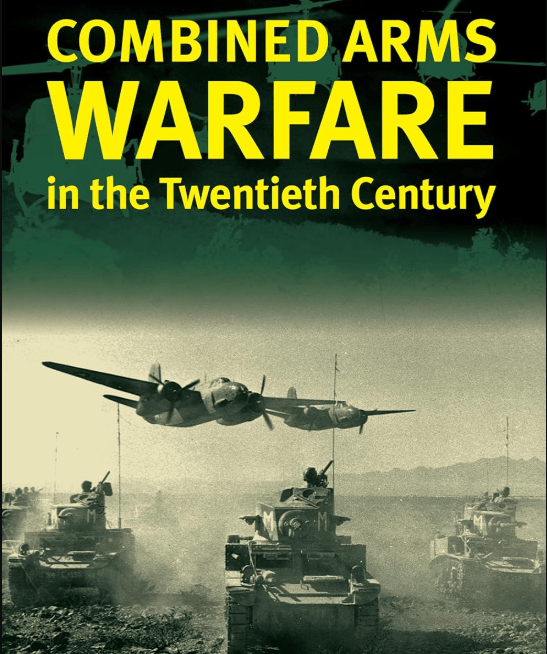
★★ Part 1: England: "Hurry up and proceed with caution!" In 1918, the British Empire was the world leader in both the development of armored equipment and tactics. The attitude prevalent at the time in most armies was still that the tank was a specialized infantry-support weapon useful in crossing entrenchments but not much else.... Continua a leggere →
A Brief History of the StG 44 the Father of Assault Rifles
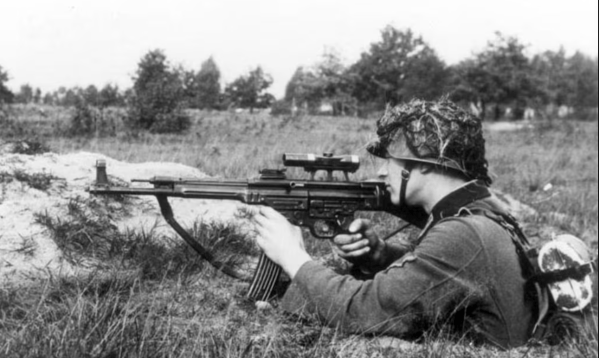
★★ Once upon a time there were two cartridges: the rifle and the pistol. The first one hits far and hard, but is difficult to control, while the second one is convenient, they have already learned to make good submachine guns from it, but it is limited in the range of effective use and does... Continua a leggere →
D-Day 1944 – Air Power Over the Normandy Beaches and Beyond
★★★ Operation Overlord, the Normandy invasion--like William the Conqueror's before it or the Inchon landing afterwards--will long be studied as a classic in military planning, logistics, and operations. OVERLORD depended to a remarkable degree upon the use of air power in virtually all its forms. A half-century ago, aircraft were primitive vehicles of war compared to... Continua a leggere →