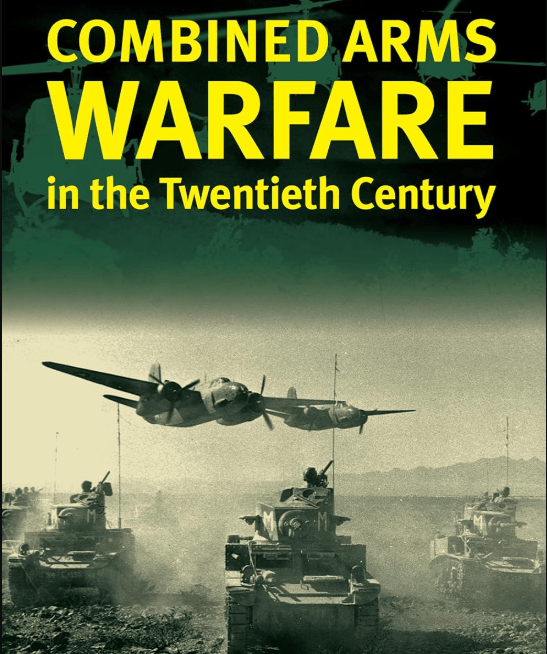
★★ Part 1: England: "Hurry up and proceed with caution!" In 1918, the British Empire was the world leader in both the development of armored equipment and tactics. The attitude prevalent at the time in most armies was still that the tank was a specialized infantry-support weapon useful in crossing entrenchments but not much else.... Continua a leggere →
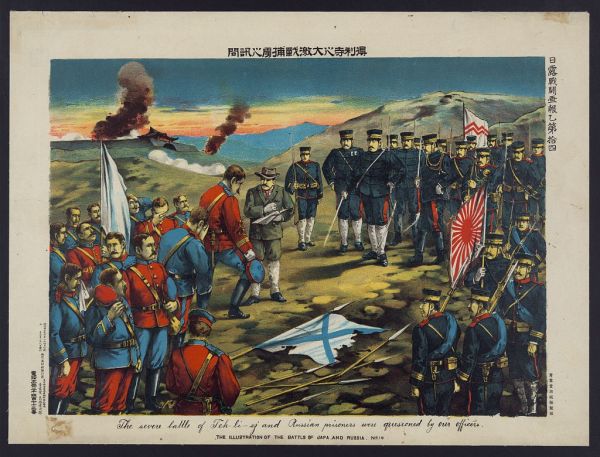
The Japanese-Russian War of 1904-1905 [Russian encyclopedia entry – ed. 1908]
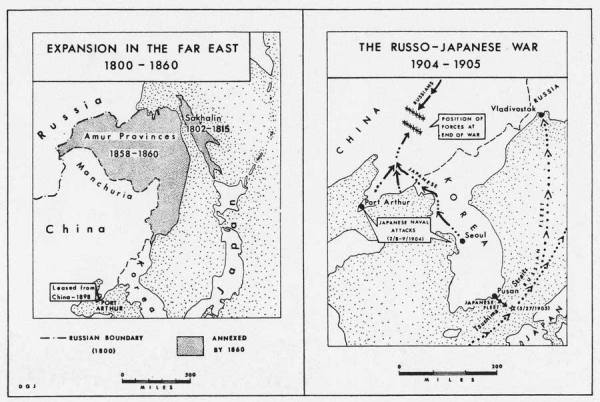
★★★ In March 1902, Russia , in order to protect the East China Railway, occupied Manchuria with its troops, pledging to evacuate it within three deadlines; the last was October 8, 1903. This obligation was not fulfilled on the grounds that the state of China did not guarantee the safety of the Russian railway line. In July... Continua a leggere →
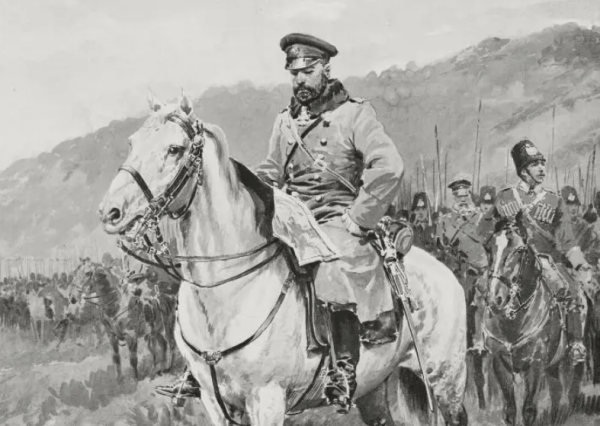
The Russian army and the Japanese war – Critical comments by General Kuropatkin (III) [ed. 1909]
★★★★ WHY THE JAPANESE WERE SUCCESSFUL The army we put in the field was unable to defeat the Japanese in the time allotted to it. Many historians will probably essay to solve the riddle of how a Power, which we regarded as belonging to the second class, and one which not long ago possessed no... Continua a leggere →
The Russian army and the Japanese war – Critical comments by General Kuropatkin (II) [ed. 1909]
★★★★ REASONS FOR OUR REVERSES Against this part of the memorandum I wrote the words, “It would be better to do it simultaneously.” On my way to the front I received a telegram from General Sakharoff, dated March 21, in which he said that my request for the troops guarding the line to Harbin to be... Continua a leggere →
The Russian army and the Japanese war – Critical comments by General Kuropatkin (I) [ed. 1909]
★★★★ REASONS FOR OUR REVERSES The minor part played by the fleet—The small carrying capacity of the Siberian and Eastern Chinese Railways—Absence of any diplomatic arrangements to permit of the unhampered dispatch and distribution of our forces—Delay in mobilization of reinforcements—Disadvantages of “partial mobilization”—Transfer during the war of regulars from military districts in European Russia... Continua a leggere →
Le renseignement militaire tsariste dans les Balkans : Son évaluation des guerres de 1912-1913
★★★ Alors que la guerre russo-turque (avril 1877-mars 1878) battait son plein depuis trois mois déjà, un quotidien de Londres s'intéressait aux « attachés militaires en Europe », estimant que leur « position (…) était très délicate en ces temps de guerre » . Le propos du journaliste ne portait pas sur leur rôle dans le conflit en cours, mais sur leurs efforts... Continua a leggere →
Patterns of War: A Re-interpretation of the Chronology of the German-Soviet War 1941–1945
★★★★ IntroductionThe Soviet-German War 1941–1945 was unprecedented in the scope of its size and scale, covering a vast geographic area and utilizing millions of people, horses, and machines, as well as a huge scale of destruction of population and property.[1] This has posed a challenge to historians to both understand the war and then portray... Continua a leggere →
Una storia dell’arte operativa (II)
★★★★ L'adozione dell'arte operativa da parte dell'esercito americano L'esercito americano era vagamente consapevole dei progressi compiuti dai sovietici nella teoria militare durante il periodo tra le due guerre. Tuttavia, l'esercito americano li disprezzava, in particolare il concetto di arte operativa. Fu liquidato come una "mera pretesa e una creazione artificiale imposta tra tattica e strategia... Continua a leggere →
Una storia dell’arte operativa (I)
★★★★ L'arte operativa è tra i concetti più degni di nota e controversi del pensiero militare moderno. L'arte operativa è emersa dall'Unione Sovietica durante il periodo tra le due guerre e, alla fine del ventesimo secolo, era una componente integrante della dottrina delle principali potenze militari. Il costrutto teorico dell'arte operativa combina le caratteristiche dei... Continua a leggere →
Materiale sullo sviluppo dell’arte militare in condizioni di guerra nucleare 1964 (III)
★★★★ Difesa C'è una discussione in corso tra i leader militari di molti paesi se la difesa sia appropriata nelle condizioni moderne. Alcuni dei nostri compagni, cercando di non ripetere la situazione del 1941, quando le nostre truppe non erano preparate non solo per un attacco ma nemmeno per la difesa, e furono costrette a... Continua a leggere →