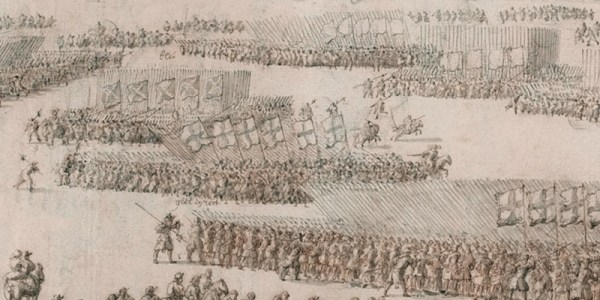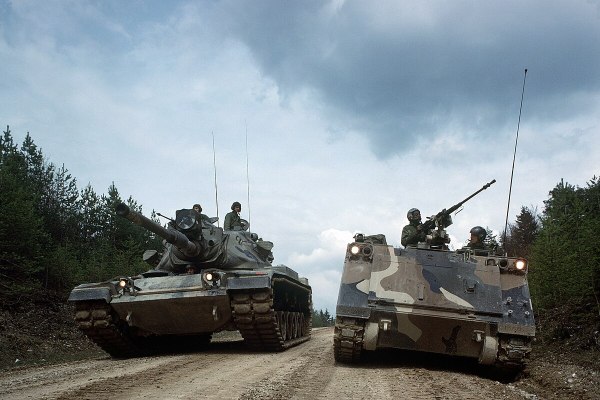
★★ Part 1: England: "Hurry up and proceed with caution!" In 1918, the British Empire was the world leader in both the development of armored equipment and tactics. The attitude prevalent at the time in most armies was still that the tank was a specialized infantry-support weapon useful in crossing entrenchments but not much else.... Continua a leggere →
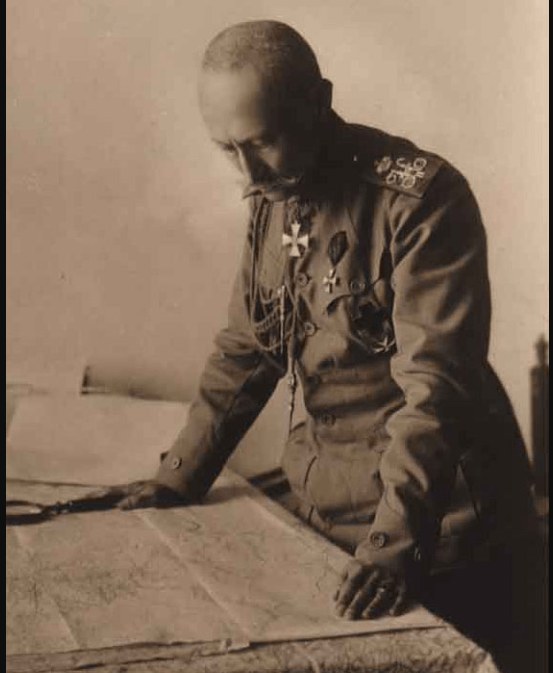
The military concept of the modern breakthrough, created by gen. Aleksei A. Brusilov
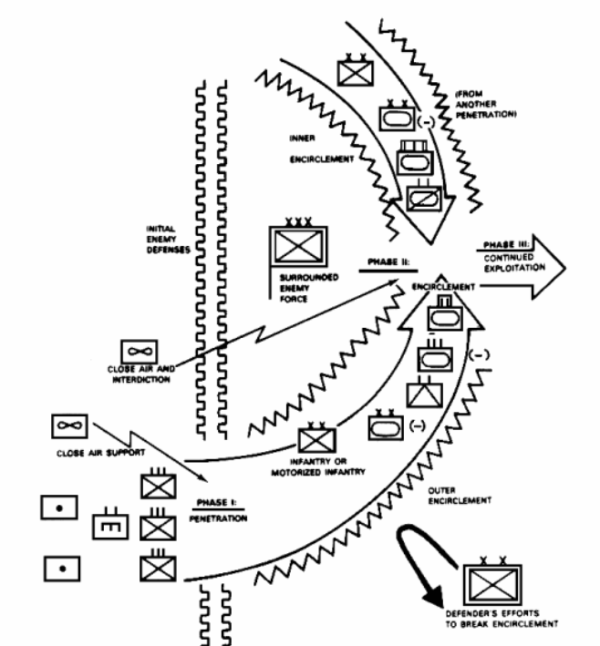
★★★ The Modern Breakthrough In the modern era of the novel Coronavirus plague, a revolutionary concept of the Breakthrough on the battlefield should be contemplated when considering engaging in the friction of war on all fronts. This modernized form of the Breakthrough should be understood and considered within the realm of the objective perspective... Continua a leggere →
Italian armored division in attack and defense [ed.1975] – Soviet analysis
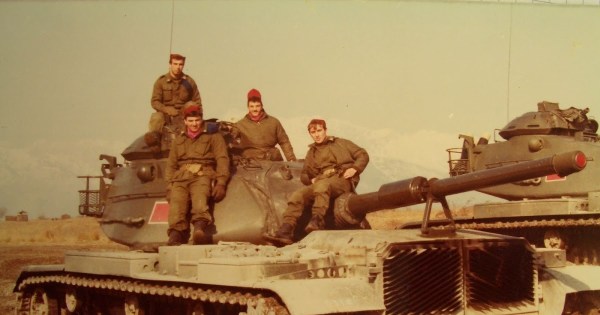
★★★ The core of the Italian armed forces is the ground forces, the development of which is in accordance with the requirements of the command of the aggressive NATO bloc. Italian experts consider the armored forces to be the main striking force of the ground forces. They are intended to solve the most important tasks... Continua a leggere →
US Mechanized Division in Primary Types of Combat [ed.1975] – Soviet analysis
★★★ The Pentagon's military preparations devote a significant place to the development of armored and mechanized forces. Thus, of the 13 divisions currently in the regular army's combat strength, three are armored and four are mechanized. A mechanized division is considered the main combined arms unit, comprising units and subdivisions of various branches of the... Continua a leggere →
The Russian army and the Japanese war – Critical comments by General Kuropatkin (III) [ed. 1909]
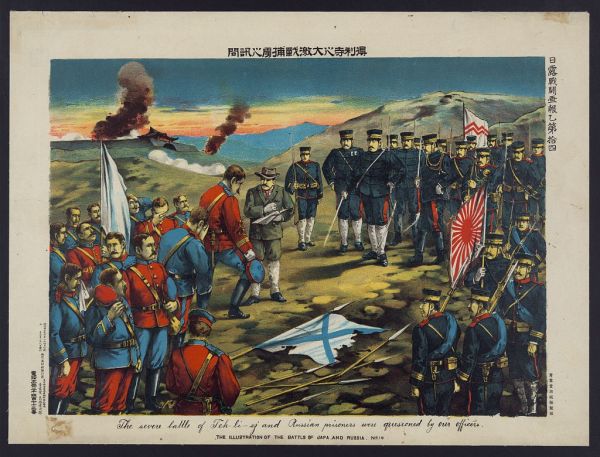
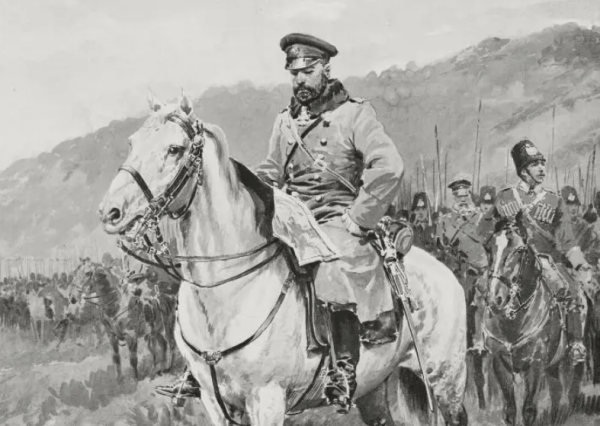
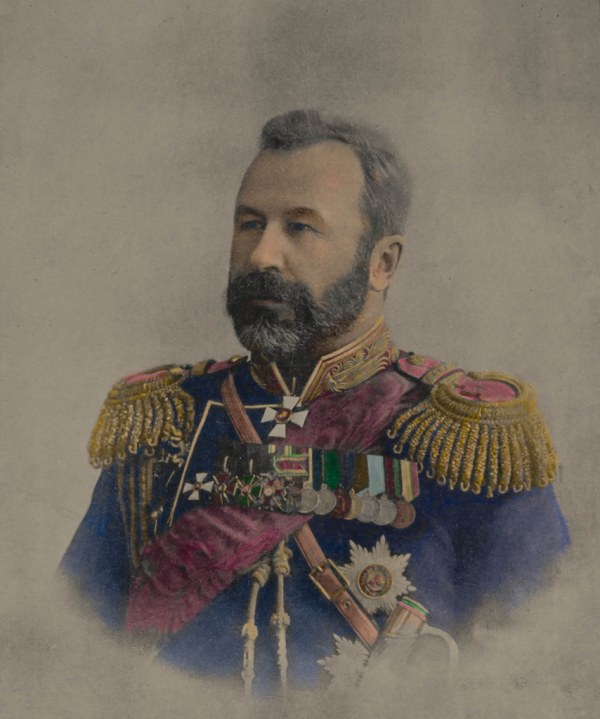
★★★★ WHY THE JAPANESE WERE SUCCESSFUL The army we put in the field was unable to defeat the Japanese in the time allotted to it. Many historians will probably essay to solve the riddle of how a Power, which we regarded as belonging to the second class, and one which not long ago possessed no... Continua a leggere →
The Russian army and the Japanese war – Critical comments by General Kuropatkin (II) [ed. 1909]
★★★★ REASONS FOR OUR REVERSES Against this part of the memorandum I wrote the words, “It would be better to do it simultaneously.” On my way to the front I received a telegram from General Sakharoff, dated March 21, in which he said that my request for the troops guarding the line to Harbin to be... Continua a leggere →
The Russian army and the Japanese war – Critical comments by General Kuropatkin (I) [ed. 1909]
★★★★ REASONS FOR OUR REVERSES The minor part played by the fleet—The small carrying capacity of the Siberian and Eastern Chinese Railways—Absence of any diplomatic arrangements to permit of the unhampered dispatch and distribution of our forces—Delay in mobilization of reinforcements—Disadvantages of “partial mobilization”—Transfer during the war of regulars from military districts in European Russia... Continua a leggere →
On Attrition – An Ontology for Warfare
★★★ Let’s hit a reset, please. Attrition is perhaps one of the most misunderstood and abused ideas in contemporary military thinking. Policymakers, military practitioners, and theorists often use and abuse a slew of pejoratives to undercut attrition.1 This phenomenon is a byproduct of 1980s and 1990s writing, which advocated non attritionalist forms of warfare that appeared... Continua a leggere →
A Solution Looking for a Problem: Illuminating Misconceptions in Maneuver-Warfare Doctrine
★★★ Warfare exists in the realm of both art and science – as a phenomenon in which sensing and intuition (in other words, art) play a complementary role to education and training (science). Just as a painter must have more than one color on his pallet, the practitioner of warfare must understand more than one... Continua a leggere →
August Neidhardt von Gneisenau
★★★★ Though many of the figures central to the reform of the Prussian army and state that took place between the battle of Jena-Auerstadt (1806) and the final defeat of Napoleon (1815) were of humble birth, none came from circumstances more desperate than those of August Neidhardt von Gneisenau. Gneisenau was born on the 27th... Continua a leggere →