★★★ What is the army rear? Every state in a war with another puts up huge armies to defend its borders, in the ranks of which there are hundreds of thousands and millions of fighters. All this huge mass of people must be clothed, fed, properly armed. This requires a huge amount of food, fodder,... Continua a leggere →
Italian armored division in attack and defense [ed.1975] – Soviet analysis
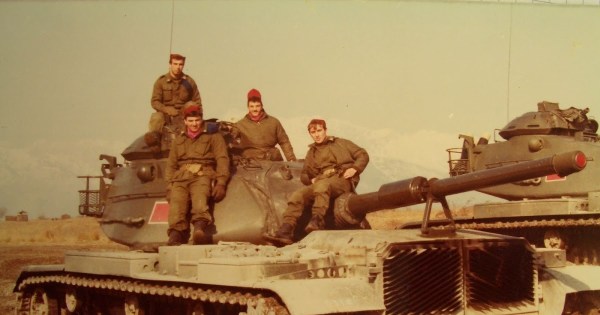
★★★ The core of the Italian armed forces is the ground forces, the development of which is in accordance with the requirements of the command of the aggressive NATO bloc. Italian experts consider the armored forces to be the main striking force of the ground forces. They are intended to solve the most important tasks... Continua a leggere →
US Mechanized Division in Primary Types of Combat [ed.1975] – Soviet analysis
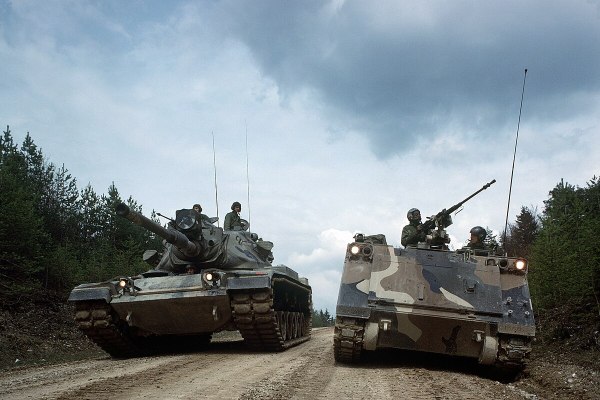
★★★ The Pentagon's military preparations devote a significant place to the development of armored and mechanized forces. Thus, of the 13 divisions currently in the regular army's combat strength, three are armored and four are mechanized. A mechanized division is considered the main combined arms unit, comprising units and subdivisions of various branches of the... Continua a leggere →
On Attrition – An Ontology for Warfare
★★★ Let’s hit a reset, please. Attrition is perhaps one of the most misunderstood and abused ideas in contemporary military thinking. Policymakers, military practitioners, and theorists often use and abuse a slew of pejoratives to undercut attrition.1 This phenomenon is a byproduct of 1980s and 1990s writing, which advocated non attritionalist forms of warfare that appeared... Continua a leggere →
A Solution Looking for a Problem: Illuminating Misconceptions in Maneuver-Warfare Doctrine
★★★ Warfare exists in the realm of both art and science – as a phenomenon in which sensing and intuition (in other words, art) play a complementary role to education and training (science). Just as a painter must have more than one color on his pallet, the practitioner of warfare must understand more than one... Continua a leggere →
August Neidhardt von Gneisenau
★★★★ Though many of the figures central to the reform of the Prussian army and state that took place between the battle of Jena-Auerstadt (1806) and the final defeat of Napoleon (1815) were of humble birth, none came from circumstances more desperate than those of August Neidhardt von Gneisenau. Gneisenau was born on the 27th... Continua a leggere →
Measuring combat effectiveness: a novel method based on two-dimensional frontline advancement rate
★★★★ Accurately measuring combat effectiveness is a cornerstone of military and political science research. Lanchester (1916) laid the foundation for this field with his renowned Lanchester equations, which focus on quantifying casualties based on the number of engaged combatants. These equations have profoundly influenced subsequent research, inspiring numerous variants over the decades. Notable adaptations include... Continua a leggere →
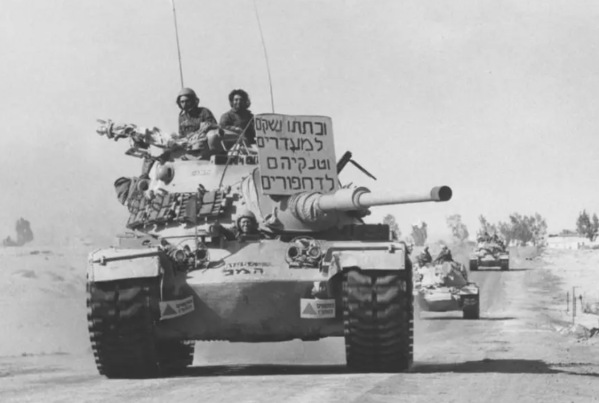
The Israeli Experience: The Apogee of Blitzkrieg
★★★ 33 minutes "Commanders seize the initiative by acting . Without action, seizing the initiative is impossible. Faced with an uncertain situation, there is a natural tendency to hesitate and gather more information to reduce uncertainty. Waiting and gathering information might reduce uncertainty, but does not eliminate it. Waiting may even increase uncertainty while providing... Continua a leggere →
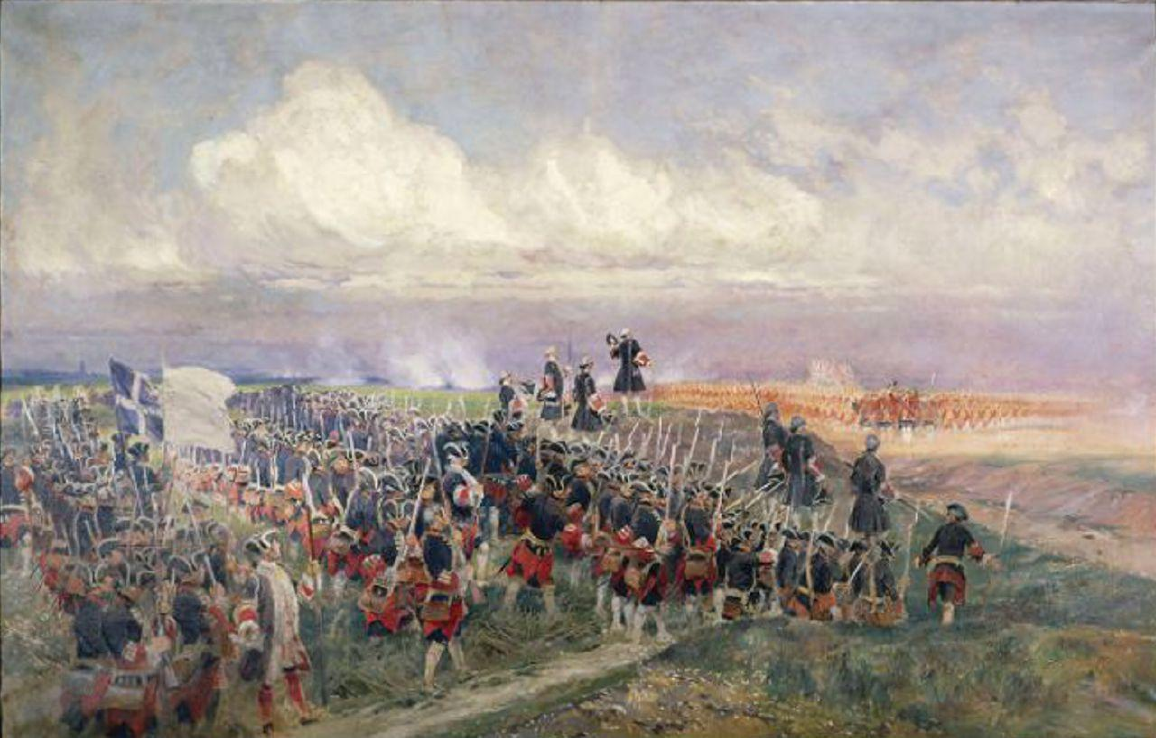
La potenza di fuoco come rivoluzione della “battle effectiveness” settecentesca
13 minuti In un articolo precedente [1] ho trattato – sommariamente e senza la pretesa di essere esaustivo – quella rottura di faglia che furono le Small Wars ed il loro impatto sugli esercizi e sulle loro dottrine di impiego. Circa un secolo prima di questa lenta e diluita “rivoluzione”, dai risvolti non subito evidenti,... Continua a leggere →
Mongols and Maneuver Warfare (II)
30 minutes The Mongol Invasion of Europe "The greatest happiness is to vanquish your enemies, to chase them before you, to rob them of their wealth, to see those dear to them bathed in tears, to clasp to your bosom their wives and daughters." Genghis Khan In 1227, Genghis Khan died at the age of... Continua a leggere →