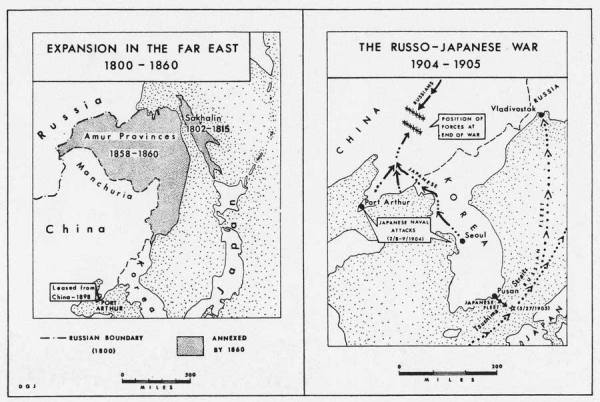
★★★ In March 1902, Russia , in order to protect the East China Railway, occupied Manchuria with its troops, pledging to evacuate it within three deadlines; the last was October 8, 1903. This obligation was not fulfilled on the grounds that the state of China did not guarantee the safety of the Russian railway line. In July... Continua a leggere →
Strategy, Language, and the Culture of Defeat: Changing Interpretations of Japan’s Pacific War Naval Demise
★★ Introduction Military historians say that military history is written from the perspective of the victor. Japan’s naval defeat in the Pacific War, however, provides a highly arguable case. Much of the translated postwar literature on the Pacific War has been written from an Allied perspective which overemphasizes Japanese weaknesses, deemphasizes the strengths of the... Continua a leggere →
Replacing Battleships with Aircraft Carriers in the Pacific in World War II (II)
★★★★ 29 minutes Lundstrom quotes Captain Duckworth as saying that the essential tactical lessons for using multiple carriers had been demonstrated in 1942 and that “all we did was apply them in the summer & fall of 1943.” [55] But two other oftenunmentioned developments were essential if multicarrier U.S. task forces were to raid far... Continua a leggere →
Replacing Battleships with Aircraft Carriers in the Pacific in World War II (I)
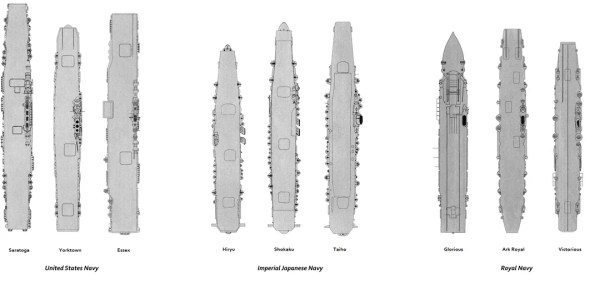
★★★★ This is a case study of operational and tactical innovation in the U.S. Navy during World War II. Its purpose is to erase a myth—the myth that Navy tactical and operational doctrine existing at the time of Pearl Harbor facilitated a straightforward substitution of carriers for the battleship force that had been severely damaged... Continua a leggere →
Interwar innovation in Three Navies: U.S. Navy, Royal Navy, Imperial Japanese Navy
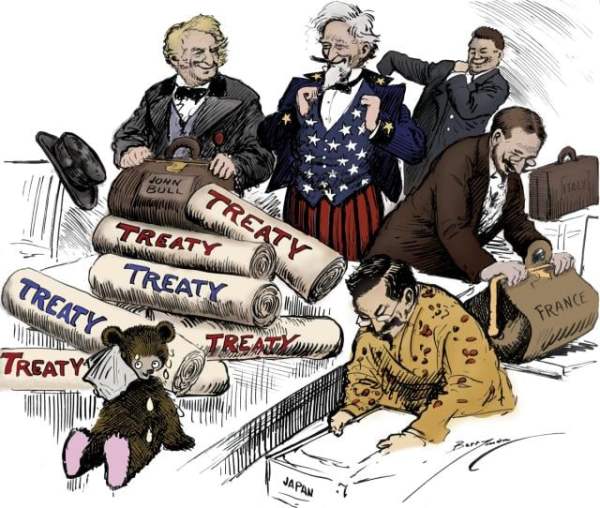
★★★★★ In 1919, three major naval powers—Great Britain, Japan, and the United States—faced two major challenges: integrating new technology into their doctrines and organizations, and coping with reduced naval expenditures and arms treaties that carne as a postwar reaction to armaments spending. In effect, money available for naval development and construction was declining at precisely... Continua a leggere →
Il Trattato di Washington e la Terza Repubblica Sviluppo navale francese e rivalità con l’Italia, 1922-1940
★★★★★ At he 1921-1922 Washington Conference on naval arms limitation had a profound effect on the French Navy. For the Marine Nationale, as in the other signatory fleets—those of Great Britain, the United States, Japan, and Italy—the conference and resultant treaty stymied capital ship construction. However, in its attempt to forestall a battleship arms race... Continua a leggere →