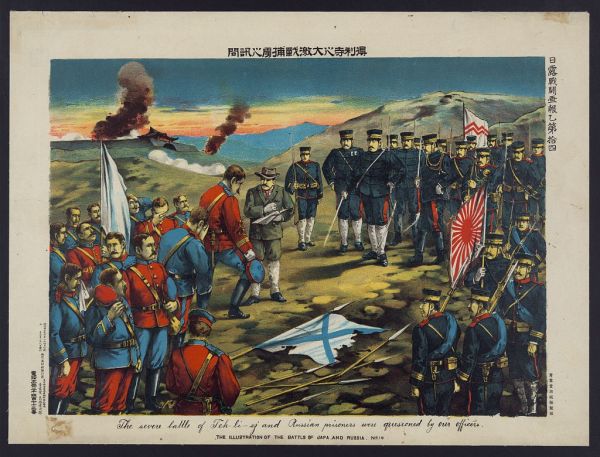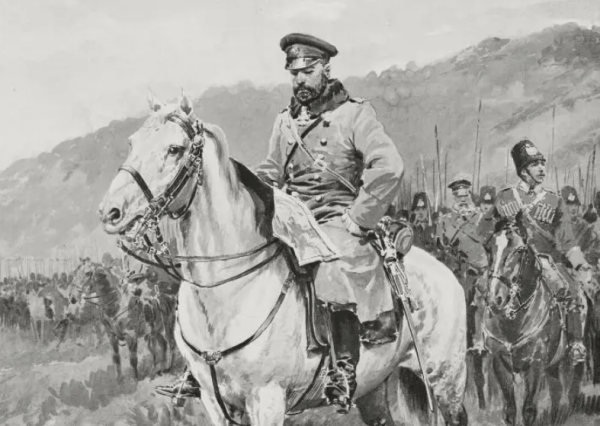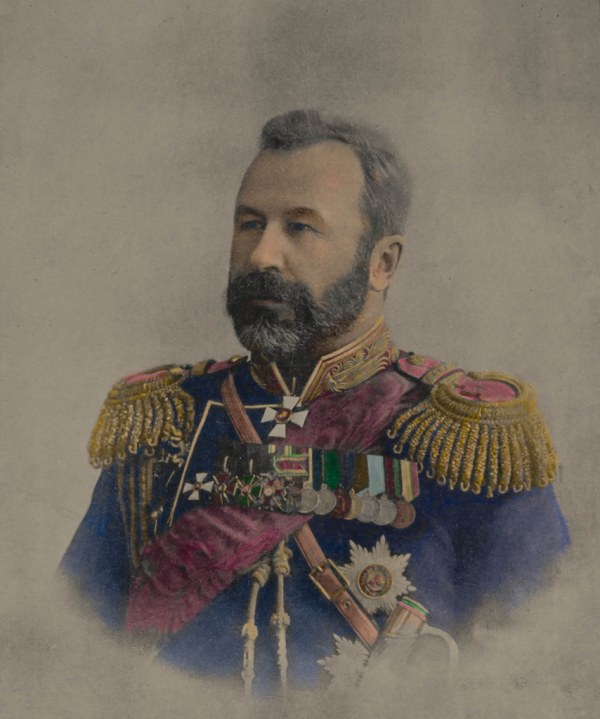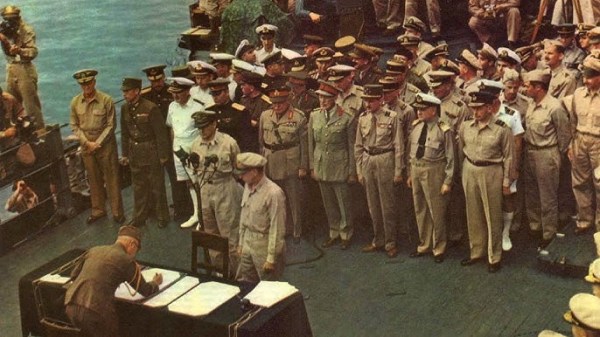
★★★★ WHY THE JAPANESE WERE SUCCESSFUL The army we put in the field was unable to defeat the Japanese in the time allotted to it. Many historians will probably essay to solve the riddle of how a Power, which we regarded as belonging to the second class, and one which not long ago possessed no... Continua a leggere →
The Russian army and the Japanese war – Critical comments by General Kuropatkin (II) [ed. 1909]
★★★★ REASONS FOR OUR REVERSES Against this part of the memorandum I wrote the words, “It would be better to do it simultaneously.” On my way to the front I received a telegram from General Sakharoff, dated March 21, in which he said that my request for the troops guarding the line to Harbin to be... Continua a leggere →
The Russian army and the Japanese war – Critical comments by General Kuropatkin (I) [ed. 1909]
★★★★ REASONS FOR OUR REVERSES The minor part played by the fleet—The small carrying capacity of the Siberian and Eastern Chinese Railways—Absence of any diplomatic arrangements to permit of the unhampered dispatch and distribution of our forces—Delay in mobilization of reinforcements—Disadvantages of “partial mobilization”—Transfer during the war of regulars from military districts in European Russia... Continua a leggere →
Strategy, Language, and the Culture of Defeat: Changing Interpretations of Japan’s Pacific War Naval Demise
★★ Introduction Military historians say that military history is written from the perspective of the victor. Japan’s naval defeat in the Pacific War, however, provides a highly arguable case. Much of the translated postwar literature on the Pacific War has been written from an Allied perspective which overemphasizes Japanese weaknesses, deemphasizes the strengths of the... Continua a leggere →
Military Law, the Canadian Militia, and The North-West Rebellion of 1885
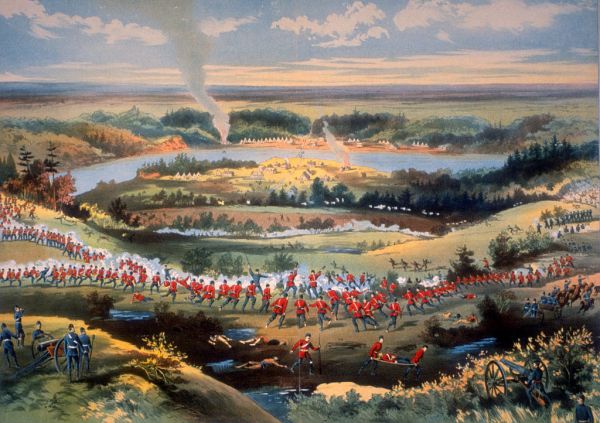
★★★ Introduction On 18 March 1885, Louis Riel and a large group of dissatisfied métis took up arms against the Dominion of Canada and declared their own provisional government at Batoche, a small community south of Prince Albert on the South Saskatchewan River. Fearful that the insurrection might encourage similar uprisings among natives and métis in other parts of... Continua a leggere →
What went wrong in afghanistan: a primer
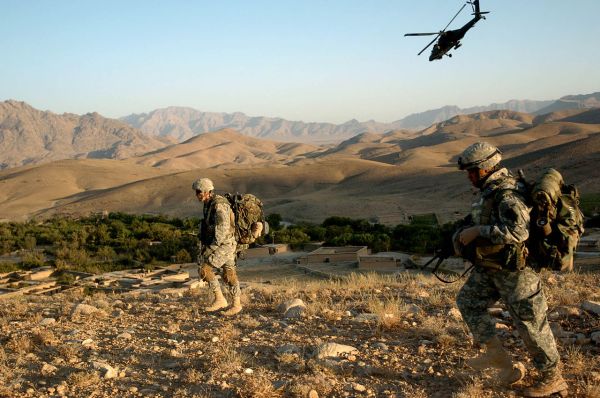
★★★ In 2001, the United States invaded and occupied Afghanistan, and eventually spent over a trillion dollars, as it and its allies killed some 170,000 Afghan citizens. Twenty years later, the United States withdrew from Afghanistan in defeat. Why was America there? Thucydides reminded us in The Peloponnesian War some 2,500 years ago that, war’s “three…strongest motives [are] fear, honor, and... Continua a leggere →
Total Rhetoric, Limited War: Germany’s U-Boat Campaign 1917-1918
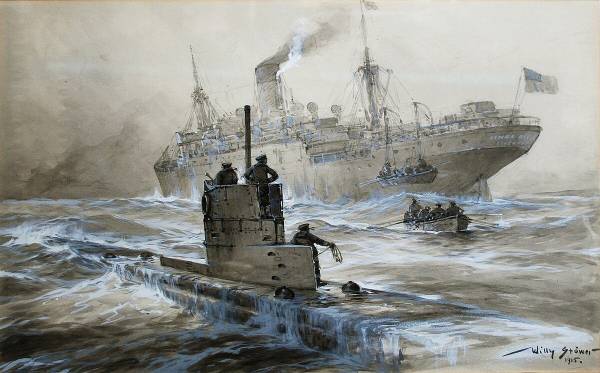
★★★ "Our armies might advance a mile a day and slay the Hun in thousands, but the real crux lies in whether we blockade the enemy to his knees, or whether he does the same to us." Admiral David Beatty - January 27, 1917 Imagine this country's sufferings after four years of blockade. The stock of... Continua a leggere →
Patterns of War: A Re-interpretation of the Chronology of the German-Soviet War 1941–1945
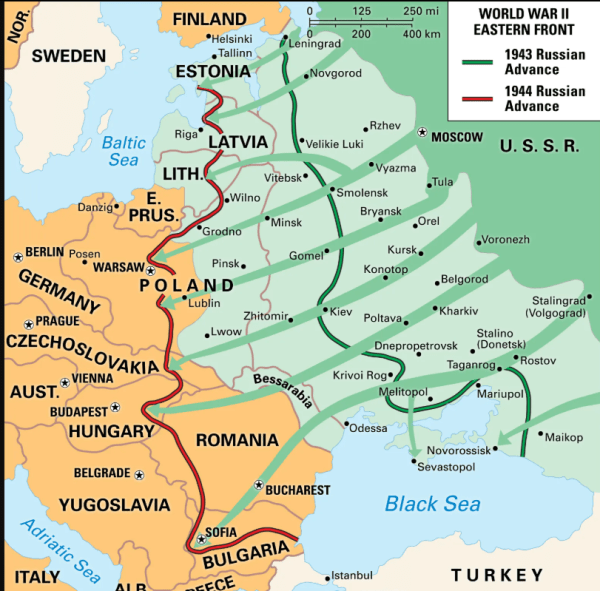
★★★★ IntroductionThe Soviet-German War 1941–1945 was unprecedented in the scope of its size and scale, covering a vast geographic area and utilizing millions of people, horses, and machines, as well as a huge scale of destruction of population and property.[1] This has posed a challenge to historians to both understand the war and then portray... Continua a leggere →
The Muslim Easy Invasion of Iberia
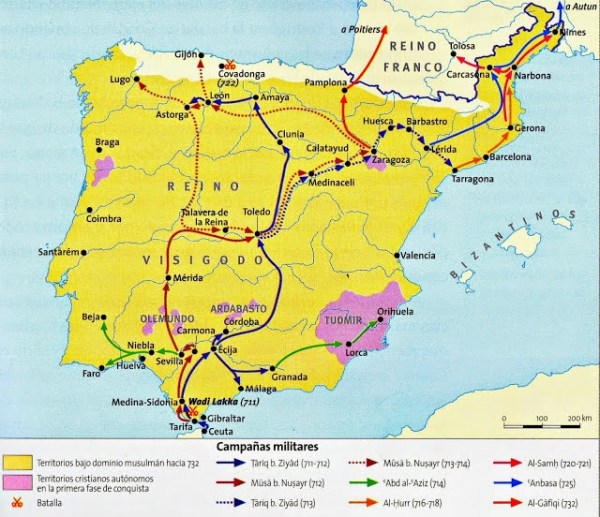
★★ After a short foray in July of 710 AD, Muslim forces from North Africa invaded the Christian Iberian Peninsula (modern day Spain and Portugal) in the spring of 711, and within two years, with the exception of the extreme northwestern portion of the peninsula, had successfully overpowered and conquered the Visigothic Christian realms of... Continua a leggere →
The Israeli Experience: The Apogee of Blitzkrieg
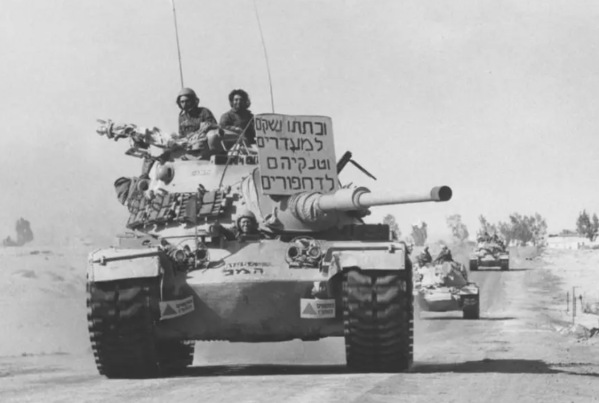
★★★ 33 minutes "Commanders seize the initiative by acting . Without action, seizing the initiative is impossible. Faced with an uncertain situation, there is a natural tendency to hesitate and gather more information to reduce uncertainty. Waiting and gathering information might reduce uncertainty, but does not eliminate it. Waiting may even increase uncertainty while providing... Continua a leggere →