Once upon a time there were two cartridges: the rifle and the pistol. The first one hits far and hard, but is difficult to control, while the second one is convenient, they have already learned to make good submachine guns from it, but it is limited in the range of effective use and does not particularly like armor. The German establishment, scratching its head with its left hand while re-equipping the armed forces to a qualitatively new level, and also raising its right hand in the direction of a bright future, had a hard time imagining that it was capable of losing the war, especially in the first two years. However, the sun-faced Germans had an even weaker idea that the fruits of the collective intellect of the Teutonic genius would be used everywhere in the future very, very intensively and extensively.
One of these fruits was the intermediate cartridge (which, naturally, appeared before the Sturmgewehr, for example, in the Mannlicher M1903 pistol-carbine), as well as the appearance of the first assault rifle that was in service and widely produced (after all, the term as such was coined earlier, as were, naturally, all sorts of models, for example, the Assault Phase Rifle designed by Isaac Lewis in 1919).
The concept of the German intermediate cartridge was laid down by engineer-colonel Friedrich Kittel, who held the position of referent in the second department of the Wehrmacht Armament Directorate, responsible for infantry weapons and equipment, from April 1935 to August 1940, and from April 1942 to April 1944 was the immediate head of this department. Almost under his leadership, the entire line of MP-38/40, MG-42, as well as our highlight of the program, was created.

Friedrich Kittel
Naturally, even before the StG, the Germans wanted and made a weapon that would have a good direct fire range, mobility (weight), accuracy of single and automatic fire, an acceptable price, etc., etc.
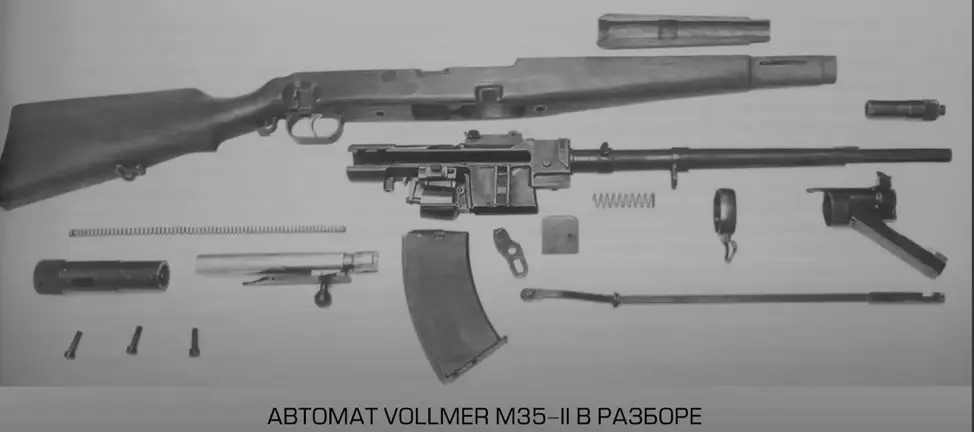
In parallel with the selection of a cartridge for such a desire, the designers of Vollmer, Walther and Mauser were developing a new weapon. Friedrich Kittel and Heinrich Vollmer began work on creating a weapon for an intermediate cartridge and started the M35 automatic carbine for the Geco 7.75×40 mm cartridge (it also exists in x39.5 or x40.5 versions).


Since these were Germans, since Vollmer himself was German, then an automatic system with the removal of powder gases from the muzzle cut was used, and not through a side hole in the barrel. The most terrible in its detailed description automatic system will not be disassembled, simply because the conversation is not about this sample, but about the one that will be in the future, this one is interesting purely in the context of the path to the ShV. In general, Vollmer’s gun turned out to be normal, but very expensive. It was also distinguished by the fact that at first it had an absolutely fierce rate of fire (up to 1000 rpm), which had to be reduced by installing a pneumatic buffer inside, which ensured the most German design of all possible, that it would be possible to make several pieces out of interest, but giving them to the troops is a terrible nightmare.
But as a result of these works, Kittel developed the final concept and technical requirements for the new cartridge and the weapon for it. The keen eye of the engineer stopped at the 7.92×33 Kurz from Polte, which will be discussed below. Therefore, the enterprising Kittel concluded a contract with the director of CG Haenel, Herbert Haenel, to develop a model for their cartridge. And by pure coincidence, the chief accountant of this company was Hans Schmeisser, and his brother Hugo worked as a designer.
The tactical and technical requirements (TTT) for the new model, drawn up by the Armaments Directorate of the Ground Forces (Heereswaffenamt – HWaA), began with the requirement to develop a cartridge of reduced power for shooting at a distance of up to 1000 meters.
The HWaA turned its attention to the Polte cartridge company from Magdeburg, where in 1938, on its own initiative, a 7.92 mm project for a “short” cartridge with a 30 mm case length, high muzzle velocity and a bullet weight of 3.7 g was created. As a result of the signing of a contract between this company and the army in 1941, detailed research and development work was carried out on the 7.92 mm “short infantry” cartridge. In 1941, work was completed with a fairly large number of prototype cartridges, as a result of which a 7.92 mm “intermediate” cartridge with a 33 mm case length, a bullet weight of 8.2 g and a muzzle velocity of 694 m/s was recommended for use. And so the 7.92×33 Kurz was born!
The initial TTT, which defined the main design features of the weapon for the “intermediate” cartridge, were revised after the studies of 1935-1937, and by 1938 the concept of the program of light automatic small arms was formed, designed to replace the PP, magazine rifle and, in part, the light machine gun. This would allow the troops to have only two (instead of the previous three) small arms systems: an automatic rifle and a single machine gun for all tasks. Economical, isn’t it?
All these developments led to the emergence of strict Tactical and Technical Characteristics (TTX) for future weapons, established by HWaA.
On April 18, 1938, the HWaA NIB signed a contract with the owner of the arms company CG Haenel Waffen und Fahrradfabrik (Suhl, Thuringia) – gunsmith Hugo Schmeisser, whom we may know from the MP 28/II and MP 41, to lead the development of an automatic carbine, which received the official name Mkb (Maschinenkarabin).
In early 1940, Schmeisser handed over to the HWaA the first prototype of an automatic carbine for the “short” cartridge of the same Polte company, whose brainchild was mentioned above. A relatively long study of the “spit-spit” complex allowed us to lay down the basic principles of automation, obvious in modern times: the removal of powder gases from the barrel. Subsequently, this principle will be implemented in almost all assault rifles of the post-war years. But it was only by 1942 that the Germans finally came to their senses: they realized that drilling holes in the barrel was not so scary, not even fatal, which allowed them to use the gas vent with a clear conscience. This is a nod to the development of the Gewehr 41 in particular.
The Schmeisser automatic rifle that was being designed was of great interest to the military, who assessed it as a promising weapon. After a fairly lengthy refinement, which lasted throughout 1941, at the end of that year, the CG Haenel company received an order to produce fifty prototypes for military testing.
Along with the aforementioned Schmeisser office, several other arms companies began to develop a new type of small arms: Carl Walther GmbH, Erma and others. Walter, confident of his victory, entered the fight for the prize in the form of Hitler’s ovation and the sweaty hands of the military, that he was capable of producing higher-quality weapons than his competitors, thanks to the presence of a powerful production base and higher scientific, technical and design potential, which had been formed over many decades of his work. True, he was told to use the finished Mkb Schmeisser system as a basis. In a short time, the first prototype was manufactured, which Walter presented to the officers of the artillery department in early 1941and technical supply of the HWaA. Although the carbine had shown satisfactory results in firing tests at the Kumersdorf proving grounds, work on refining this imperfect design continued throughout 1941.
At the end of January 1942, in order to carry out extensive testing to ensure that it met its requirements, the HWaA requested that CG Haenel increase its initial order for the Mkb production in 1942 to 200 units, and that Walther submit automatic carbines of its own design by July 1942. Both HWaA systems were designated Mkb-42, the CG Haenel product with the “H” index – Mkb-42(H), and the Walther model, respectively, with the “W” index – Mkb-42(W).
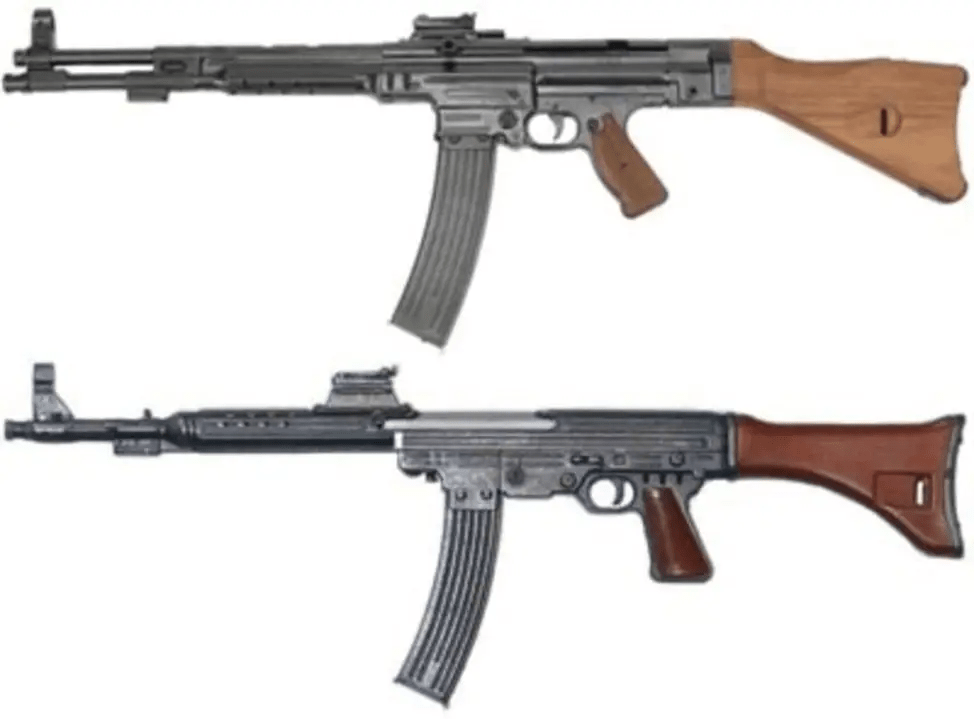
Top – Mkb-42 (H), bottom – Mkb-42 (W).
After the demonstration of the Mkb-42 (H) and Mkb-42  prototypes at an official exhibition in July 1942, the leadership of the German Ministry of Armaments and HWaA remained convinced that both companies would soon complete the development of their brainchildren, receive a ersatz chocolate bar and approval from a corporal. But this was not destined to happen. In August 1942, HWaA presented new requirements for the initial specifications. In short, war experience showed that the promising bullet gun should be multifunctional, as if it were assembled by the Swiss: it could shoot bullets, stab with a bayonet, hammer with a butt, and launch grenades from the barrel, as the Kar98k had learned to do. In short, by October, the designers had not manufactured a single sample.
The meager production figures did not suit anyone, but Reich Minister of Armaments Albert Speer wanted to study the samples and ordered that the carbines be sent to the Eastern Front for military testing.
In general, both models had many similarities in design due to identical HWaA requirements. Tests showed that although the Mkb-42 was lighter, more compact and better balanced, its complex automatic system was not suitable for use in adverse field conditions. The Mkb-42 (H) was simpler and more reliable than the Walther model. As a result, the HWaA decided to give preference to the Schmeisser design, but only after making some changes to it.
The CG Haenel company, at the same time as the work on finalizing the brainchild was carried out, continued to produce a small number of Mkb-42 from February to June 1943. In total, about eight thousand automatic carbines were produced by mid-1943, of which approximately 2800 were Mkb-42 and 5200 were Mkb-42 (H). And thanks to the support of Reich Minister Speer, in June of the same year, a modernized weapon under the designation MP 43 (Maschinenpistole-43. Submachine gun, yes, yes. Why is that? It was simply necessary to deceive some dissatisfied person so that he would not notice anything. Hitler, who was categorically against the new type of weapon, believing that a bunch of rifle cartridges in the Reich warehouses would become useless to anyone, so Speer made such a feint, the truth about which Aloisovich learned only two months later ).
And the German military had already recognized the effectiveness (not without sins) of the MP 43 and its ammunition. The new weapon significantly increased the firepower of infantry units and reduced the need for them to use light machine guns for fire support. The SS generals thought the same, so in their first reports they asked the Führer to allow immediate mass production of this unit. True, the soldiers also said that the weapon must be accompanied by logistics capable of ensuring its firing with the appropriate number of rounds, but we modestly remain silent about this.
Lance Corporal Schöneberg, August 7, 1943: “Regarding the use of the MP-43(A) in defense. The test went very well and outperformed the 98k carbine. Since the enemy is in most cases no more than 300 m away, you can fight him with the MP-43(A). The presence of single fire gives the opportunity to make aimed shots…. While with the Karabiner 98k you need to reload the weapon after each shot, you can make 30 shots without reloading. This increases the firepower of the group and makes it difficult for the enemy to approach our position. Reloading magazines does not take longer than loading a carbine…. If the Karabiner 98k is replaced by the MP-43, it would be advisable to introduce more rifles with an optical sight so that it would be possible to effectively fight the enemy even at a distance of more than 300 m”.
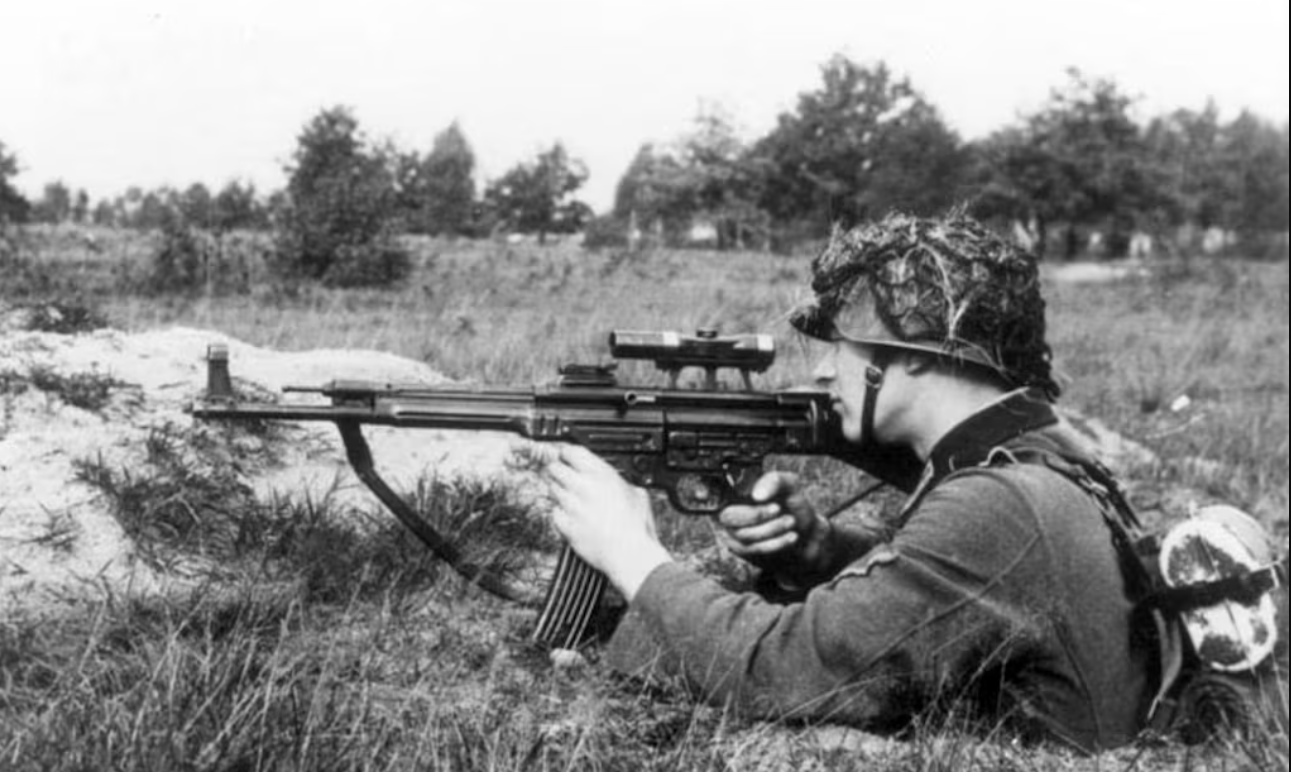
In general, Hitler, despite all the requests, could not but allow the launch of such a vaunted model of weapons into production. Having adopted the MP 43, its development was not long in coming. For example, they developed the sniper MP-43/1, on which they installed a milled mount for a four-power sight ZF-4, as well as infrared night vision sights Zielgerät 1229 Vampir.

On April 6, 1944, the Supreme Commander of the Reich Armed Forces issued an order dedicated to the Wehrmacht small arms system, in which the MP 43 was renamed the MP 44, although there were no innovations. The complication of the military situation led to the fact that in October 1944, Hitler had to issue another order, according to which the MP 44 was now finally called StG 44 (Sturmgewehr). The new (correct) name began to more accurately reflect the role and main purpose of this weapon in combat, although it was originally introduced to raise the morale of the troops. No changes were made to the design of the machine gun, except for the stamp.
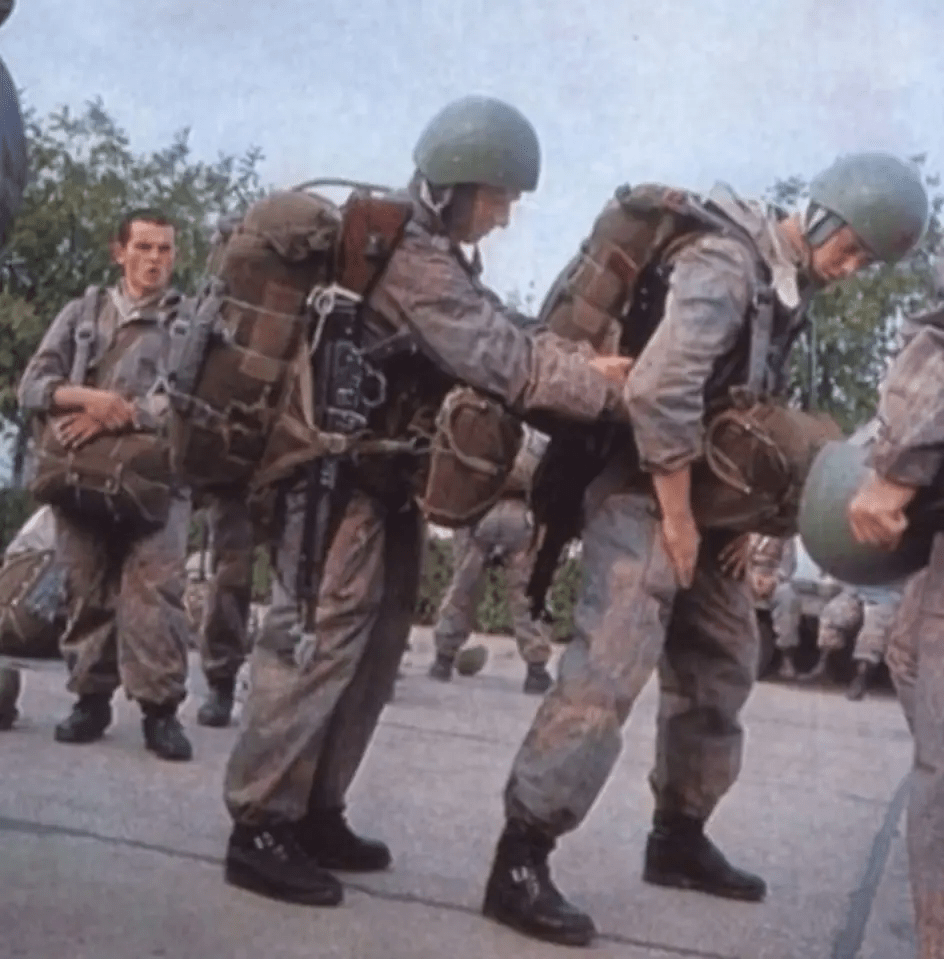
The Sturmgewehrs were primarily in the hands of elite troops – motorized units and formations of the Wehrmacht and the SS field troops. And their history of use did not end with the fall of the Third Reich. After the war, they were in service with the barracks police of the GDR from 1948 to 1956, and in 1945-1950 – the airborne troops of the Yugoslav People’s Army.
Well, about the direct legacy: at the end of 1944, the German designer Ludwig Vorgrimler designed an experimental rifle StG 45(M). But Germany’s defeat in the war did not allow the development of the assault rifle to be completed.
After the war, Vorgrimler moved to Spain, where he joined the design bureau of the arms company CETME. In the mid-1950s, Ludwig created the CETME Model A assault rifle based on his StG 45 design.

After some time, Model B appeared…

In 1957, the license for the CETME automatic rifle was acquired by the German company Heckler & Koch. This company was founded in 1948 by three former engineers from the same destroyed Mauser factory in Obendorf. Based on CETME, the German company creates the H&K G3 rifle, which enters service with the Bundeswehr in 1959.

Of course, the CETME, H&K G3 and other contemporaries are now obsolete, but it is worth recognizing the considerable merit of German engineers in pushing the development of many models of small arms. Ludwig Vorgrimler returned to Germany in the late 1950s and again began working for the Mauser company. Before his death in 1983, he received a number of patents for his inventions. And it all started with the desire of the German military to combine a pistol and rifle cartridge!

Fathers and sons
Autore: Vladislav Shirkin (Владислав Ширкин)
 militartis.com
Lascia un commento