★★★★ REASONS FOR OUR REVERSES Against this part of the memorandum I wrote the words, “It would be better to do it simultaneously.” On my way to the front I received a telegram from General Sakharoff, dated March 21, in which he said that my request for the troops guarding the line to Harbin to be... Continua a leggere →
The Russian army and the Japanese war – Critical comments by General Kuropatkin (I) [ed. 1909]
★★★★ REASONS FOR OUR REVERSES The minor part played by the fleet—The small carrying capacity of the Siberian and Eastern Chinese Railways—Absence of any diplomatic arrangements to permit of the unhampered dispatch and distribution of our forces—Delay in mobilization of reinforcements—Disadvantages of “partial mobilization”—Transfer during the war of regulars from military districts in European Russia... Continua a leggere →
On Attrition – An Ontology for Warfare
★★★ Let’s hit a reset, please. Attrition is perhaps one of the most misunderstood and abused ideas in contemporary military thinking. Policymakers, military practitioners, and theorists often use and abuse a slew of pejoratives to undercut attrition.1 This phenomenon is a byproduct of 1980s and 1990s writing, which advocated non attritionalist forms of warfare that appeared... Continua a leggere →
A Solution Looking for a Problem: Illuminating Misconceptions in Maneuver-Warfare Doctrine
★★★ Warfare exists in the realm of both art and science – as a phenomenon in which sensing and intuition (in other words, art) play a complementary role to education and training (science). Just as a painter must have more than one color on his pallet, the practitioner of warfare must understand more than one... Continua a leggere →
August Neidhardt von Gneisenau
★★★★ Though many of the figures central to the reform of the Prussian army and state that took place between the battle of Jena-Auerstadt (1806) and the final defeat of Napoleon (1815) were of humble birth, none came from circumstances more desperate than those of August Neidhardt von Gneisenau. Gneisenau was born on the 27th... Continua a leggere →
Measuring combat effectiveness: a novel method based on two-dimensional frontline advancement rate
★★★★ Accurately measuring combat effectiveness is a cornerstone of military and political science research. Lanchester (1916) laid the foundation for this field with his renowned Lanchester equations, which focus on quantifying casualties based on the number of engaged combatants. These equations have profoundly influenced subsequent research, inspiring numerous variants over the decades. Notable adaptations include... Continua a leggere →
Le renseignement militaire tsariste dans les Balkans : Son évaluation des guerres de 1912-1913
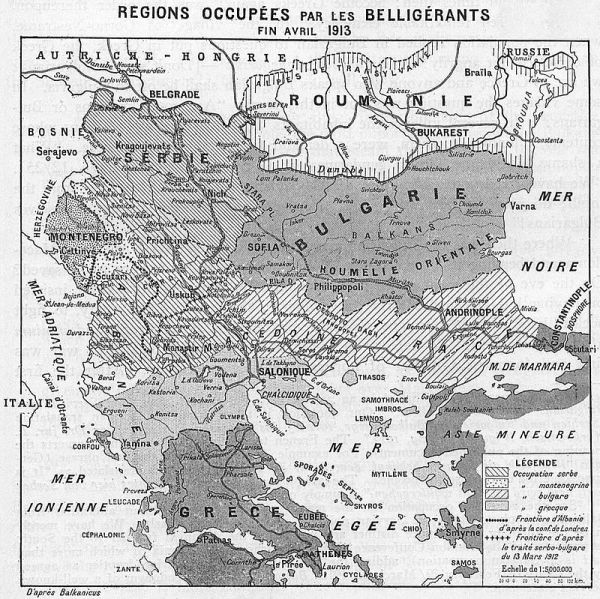
★★★ Alors que la guerre russo-turque (avril 1877-mars 1878) battait son plein depuis trois mois déjà, un quotidien de Londres s'intéressait aux « attachés militaires en Europe », estimant que leur « position (…) était très délicate en ces temps de guerre » . Le propos du journaliste ne portait pas sur leur rôle dans le conflit en cours, mais sur leurs efforts... Continua a leggere →
Histoire des institutions militaires françaises du Moyen Âge au XIXe siècle: d’une armée féodale à une armée moderne
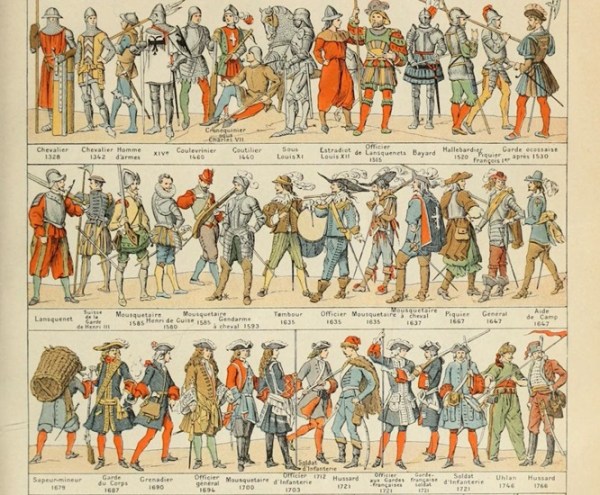
★★ I - Les caractéristiques fondamentales de l’armée féodale De l’idée d’une armée à une armée féodale Les premiers concepts fondamentaux sont hérités de la tradition romaine. En Gaule, les troupes sont commandées par un maître de la cavalerie à Trèves sous les ordres d’un maître de la milice et de l’empereur. Le service militaire... Continua a leggere →
L’impiego tattico della fanteria durante la guerra Russo-Giapponese [ed.1911]
★★★★ Sebbene della guerra russo-giapponese non sia stata ancora pubblicata la storia ufficiale, pure le notizie che ci sono fin qui pervenuta per opera essenzialmente dello stato maggiore tedesco e di quello inglese, nonché per le numerosissime opere uscite fino ad ora sull'argomento, hanno ormai dissipata la fitta nebbia che fino a poco tempo fa... Continua a leggere →
L’OPERAZIONE BRITANNICA “CHARIOT”
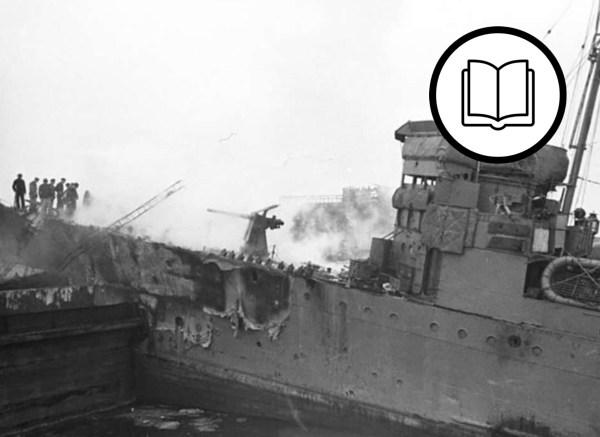
★★★ Abstract: Questo saggio analizza in modo approfondito, attraverso fonti britanniche ufficiali e documenti tedeschi inediti, la pianificazione e lo svolgimento dell’audace attacco condotto dalla Marina britannica contro la base navale tedesca di Saint-Nazaire, tra il 27 e il 28 marzo 1942. L’obiettivo principale dell’operazione era la distruzione del grande bacino di carenaggio situato sulla... Continua a leggere →