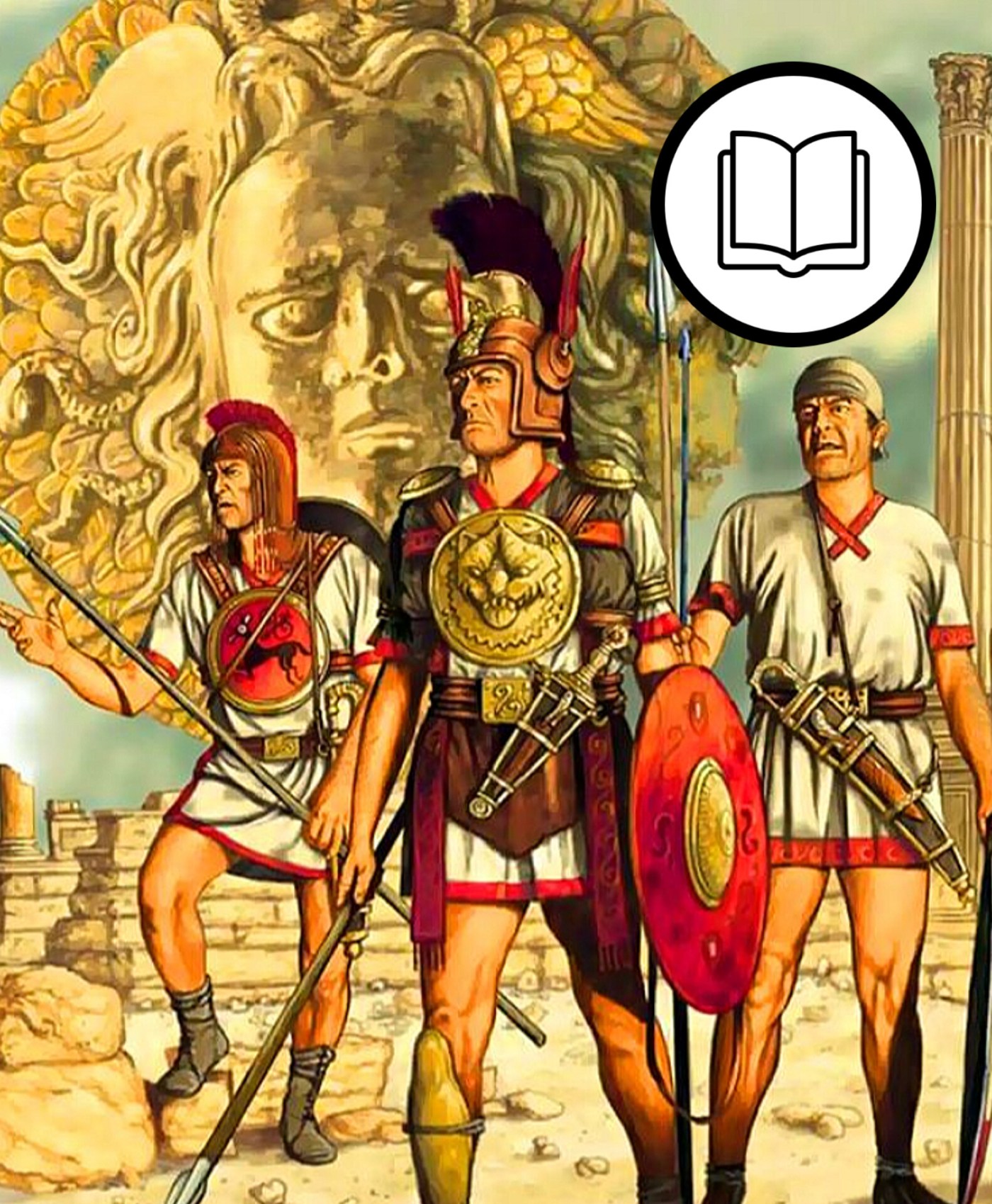
Abstract: The weapons carried by the Iberian warrior during the fourth and third centuries BC were typical those used by of a dual-purpose infantry, capable of using both close and open order tactics closely similar to those employed by Hellenistic thureophoroi. This panoply was based on a heavy throwing weapon -pilum, soliferreum or heavy throwing spear-, a main thrusting spear and a short thrusting and stabbing sword (falcata or antennae sword). Late in the third century three significant elements were added, mainly by the professional soldiers serving under Hannibal or Scipio: the oval shield (scutum or thureos), the ‘jockey cap’ type bronze helmet, and new sword types with longer blade and cutting and thrusting capabilities. This panoply is strikingly similar in functionality to the weapons carried by the Roman Republican legionaries, save for the old-fashioned triarii. Admittedly, ancient tactics were not determined by the choice of weapons, but there is a strong relationship between them. If we analyze the more detailed and precise literary sources (mainly Polybius and Livy, but also some descriptions by Diodorus and Strabo) a pattern emerges: the Iberians were quite capable of fighting pitched battles in close order formations of a formal nature, in instructa acies as Livy puts it, and their individual and small unit tactics were strikingly similiar to the Roman fighting techniques.
Autore: Fernando Quesada Sanz
Link document: Jstor.org
 militartis.com
Lascia un commento